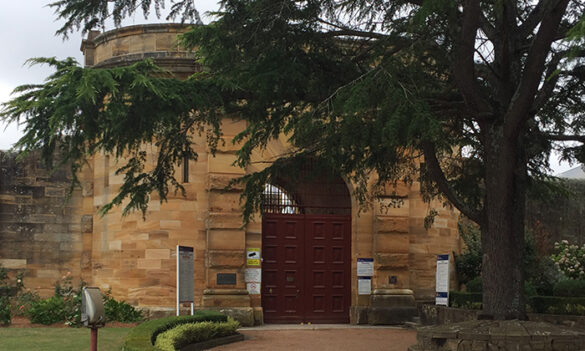
On the 8 June 2023 your elected members of the Sheriff Officer’s Vocational Branch Advisory Group (SOVBAG) met with the Office of the Sheriff of NSW (NSWSHO) to discuss a whole host of important issues affecting members.
The issue we are hearing most from members relates to the proposed “Uplift” program. Members would have received an update from Deputy Sheriff Gordon in relation to this matter. At the moment this program can best be described as being in a holding pattern. While the business case has been completed, there is still uncertainty surrounding the state budget and the new Government’s priorities. While we can understand some of the frustrations members are experiencing with this ongoing process, the PSA remains committed to working with the NSWSHO in achieving the outcome of appropriate remuneration for the work you perform.
It is anticipated that in the future further conversations will take place surrounding how this process could be facilitated industrially. It should be noted that as of right now, the wages regulation (2.5 per cent wages cap) remains in place. While the new government has committed to abolishing this and has announced a taskforce to work on building a new industrial relations framework, we are currently still operating under the same system. The PSA has been active in the media calling for the wages cap to be removed as a matter of priority.
Body worn cameras
The introduction of body worn cameras for Sheriff’s Officers is on hold until it is passed through Parliament. The new government is still working through its legislative agenda, with election commitments and critical items being given priority. As a result, the necessary changes to legislation needed for body worn cameras to be allowed in court rooms is in a legislative backlog.
Flexible Working Hours Policy
A short while ago, the PSA raised concerns on behalf of Sheriff’s Officers working in the Sheriff’s Operations Centre (SOC) and their overtime rates. The main issue at hand was that due to an outdated flexible working hours agreement these members are on a 38-hour week, which for the most part works well for their standard hours. However, as their hourly salary is reduced due to working 38 rather than 35 hours, if they ever pick up any overtime shifts as a Sheriff’s Officer they are disadvantaged in that their hourly rate is lower.
At the most recent meeting with the NSWSHO it was indicated that a review of flexible working hours agreements was taking place across the Department of Communities and Justice (DCJ) with the view of updating this agreement as it is now out of date. The PSA will look to progress this hourly rate matter in the meantime with DCJ.
200 years of the Supreme Court and NSWSHO
As members may be aware, next year marks 200 years of the NSWSHO in NSW. The PSA was interested in knowing if there were any plans in place for next year to celebrate this milestone. The employer indicated that there are budgetary constraints but is open to ideas, particularly if they are low- or no-cost. The PSA welcomes any feedback from members on ways that this historic milestone can be celebrated.
State-wide members’ meeting
In order to discuss the above items as well as a number of other important issues, the PSA has organised to hold a state-wide members’ meeting. Details are as follows:
NSW Police Force Departmental Committee: Call for nominations now open
Nominations are called for positions on the NSW Police Force Departmental Committee.
Each nomination must be seconded by two other financial PSA members from the same electorate as the nominee.
Please read the following carefully, as electorates have changed.
The call for nominations is as follows:
Electorate
Site
Delegates required
Group A
Specialist Commands
9
Electorate 1
FETS and CSC
Forensic Evidence & Technical Services Command and Communications Services Command (excluding staff in Radio Operations Group – VKG).
2
Electorate 2
PoliceLink
2
Electorate 3
Corporate, Technology and Legal
(Incl. Corporate Services, Technology Command, Professional Standards Command, Police Prosecutions Command, Office of the Legal Counsel, Legal Services and Office of the Commissioner])
2
Electorate 4
Specialist Commands – CTST and PTSC
Counter Terrorism & Special Tactics Command (excluding SMG Special Constables) and Police Transport & Public Safety Command (Incl. Aviation and Marine Commands, Dog and Mounted Units, excluding Traffic & Highway Patrol).
1
Electorate 5
Public Affairs and Recruitment Branches
(Incl. Goulburn Police Academy)
1
Electorate 6
SIC and SCC
State Intelligence Command and State Crime Command
1
Group B
Station Staff/Regions
9
Electorate 7
Station Staff – Central Metro Region
(Incl. Workforce Safety and SPC [excluding staff in Radio Operations Group – VKG])
2
Electorate 8
Station Staff – North West Metro Region (Including all PHQ staff who cannot vote in Group A and Traffic and Highway Patrol)
2
Electorate 9
Station Staff – South West Metro Region
1
Electorate 10
Station Staff – Northern Region and Firearms Registry
2
Electorate 11
Station Staff – Western Region
1
Electorate 12
Station Staff – Southern Region
1
Total
18
Changes to electorates
There are multiple changes within electorates which, as noted above, include:
Merger of 2 electorates under Group A (FETS and Potts Hill).
Creation of 4 new electorates under Group A (CTST/PTSC, Public Affairs/Recruitment, SIC/SCC).
Merging of 12 former electorates into 6 under Group B (All Station Staff, Traffic & Highway Patrol and Firearms Registry).
Deletion of Parramatta Headquarters electorate under Group B with redistribution amongst 3 other electorates (2 in Group A, and 1 in Group B).
The reasons for the changes are to consolidate the electorates and ensure members are adequately represented in line with current ways of working within NSWPF (i.e., by relevant Commands rather than physical location – a majority of members no longer necessarily attend one location or do hybrid work).
The above changes and reasons provided have been endorsed by the current NSWPF Departmental Committee.
Nominations and closing date
Nominees, nominators, and seconders must be financial members of the Association as at COB 26 JUNE 2023.
Nominations must be submitted via the following Survey Monkey link by COB 20 July 2023.
If there is a ballot, candidates who wish to have a profile available for voters to read should provide a brief statement of 300 words or less stating how they will best represent members’ interests.
Grace Bailey
for GR Bensley Deputy Returning Officer
The PSA was recently informed that the Crown Solicitor’s Office (CSO) intends to pause the Accommodation Arrangements Project. Following this, your PSA Delegates and Industrial Staff met recently with management for the CSO Joint Consultative Committee (JCC). Below is an update on the Accommodation Arrangements Project and the matters were discussed on behalf of PSA members:
PSA success in pausing the Accommodation Arrangements Project
From April to May 2023, the CSO consulted with staff and the PSA on its proposal to lose a floor of the office, which would result in there being an insufficient number of desks for all staff. The proposal outlined an implementation plan for a shared desk/hot desking system within the office.
In response to feedback received from Members, the PSA raised numerous concerns about the project, including, in particular, the concern that the project had not been fully thought through and that the CSO had failed to comply with its obligations to consult with workers under the Work Health and Safety Act 2013. The PSA’s submitted written member feedback by way of letter found HERE. We encourage members to review this letter and thank those who provided feedback.
The CSO has reported that more than 125 responses were received from staff via the online feedback form during the consultation period. The PSA understands many of these responses raised similar concerns to those expressed in the PSA’s feedback.
Management has reported that, after considering the feedback provided by the PSA and staff, the CSO Executive Leadership Group has decided no changes would be made to the current office arrangements at this stage. Members should feel empowered that their concerns have been listened to!
Unfortunately, however, the CSO’s response indicates it may go ahead with the project (or a similarly framed project) sometime in the future. Management has stated the CSO will now focus on workplace initiatives aimed at gathering further information regarding in-office activities, growth estimates and to respond to matters raised through the consultation process. The Crown Solicitor wrote to the PSA on 1 June 2023 confirming the decision HERE.
The PSA and your delegates are meeting with the CSO in the next week to discuss further developments on this proposal. The PSA and your delegates will report back to members with further information.
PaTH Project (myWorkZone)
Management advised that the CSO intranet has been updated with myWorkZone implementation information and that all staff emails will provide information about training, resources and actions required by staff to support the transition from JSAP to myWorkZone. This is due to be implemented on 3 July 2023.
Flexible Working Hours Agreement
Management acknowledged the Flexible Working Hours Agreement is outdated and confirmed that People & Culture may have capacity around September 2023 to commence steps to negotiate a new Flexible Working Hours Agreement with the PSA subject to the Crown Solicitor’s approval.
The PSA will follow up with management for negotiations to commence for a new Flexible Working Hours Agreement as soon as possible.
Work Health and Safety
Health and Safety Representatives (HSRs)
Management reported that three staff members have expressed interest in being HSR representatives for the CSO. The nominees will have to complete HSR training following which their appointments will be formally announced by People & Culture.
Any member is welcome to express interest in being a HSR, which is an important role within the workplace. Being an HSR is an opportunity for members to gain new knowledge, experience and training on workplace health and safety matters. If any member wants further information about being an HSR, including what is involved please contact your delegates or PSA representatives.
Wellbeing working group
The second meeting was held recently, and Terms of Reference will be finalised at the next meeting.
One of the actions under the Wellbeing action plan was to deliver the Proactive Wellbeing Supervision Program. CSO high-risk teams were invited to participate in the program.
All WHS policies are currently under review by People & Culture.
General business
PSA delegates sought clarification on Graduates and the option to undertake temporary assignments (TAs) into higher graded roles. Management confirmed that Graduates are able to accept a temporary or permanent employment offer for a higher role, however if they do this, they will have to resign from their role in the Graduate Development Program. Management advised that this practice is consistent with the NSW Government Graduate Program lead by the NSW Public Service Commission. Management confirmed that Graduates cannot be temporarily assigned to a higher graded role.
Office of the Director of Public Prosecutions: Workload dispute, Award application update
The PSA’s application for an Office of the Director of Public Prosecutions (ODPP) Flexible Working Hours Award (FWHA) was listed for an interlocutory hearing before the Full Bench of the Industrial Relations Commission (IRC) on 14 June 2023.
As members will recall from our previous bulletins, the PSA has brought the substantive application in response to unaddressed and ongoing overwork issues in the ODPP. The PSA contends that overwork has manifested widespread forfeiture of flex by solicitors at the ODPP. The PSA’s application seeks to enshrine aspects of the existing FWHA into an Award, including a Safe Workload Practice requirement and accountability measures designed to prevent the forfeiture of flex by solicitors.
Application to reopen the hearing and adduce fresh evidence
The PSA made an application to reopen the hearing in order to adduce further evidence. The Full Bench delivered an ex tempore decision refusing leave to reopen the case so that the PSA might adduce fresh evidence, including the ODPP People Matter Employee Survey (PMES) results, the Director’s speech to the ODPP solicitors conference in December 2022, and evidence about the Nous Consultancy engaged by the ODPP. The PSA contended that the open acknowledgement by the Director of workload issues was relevant to the Award application because it undermines the position put forward by the ODPP to date that forfeiture of flex was not widespread and was ‘exaggerated.’
Counsel for the ODPP had submitted that if the evidence were admitted that the ODPP would lead evidence about what was meant by “workload” when used by the ODPP and what “workload” when referred to by the PSA and that this would cause further delay. In light of this, the full bench was concerned that admitting the fresh evidence would run “a very real risk of the parties and of the Commission becoming embroiled in potentially fruitless debate as to whether the parties mean the same thing when the applicant refers to “work overload” and the respondent refers to “workload issues”.
The PSA maintains widespread flex forfeiture is a symptom of systemic overwork and, while disappointed with the decision of the IRC Full Bench, accepts the ruling. Your union is reassured the ruling does not undermine the strength of the existing evidence submitted in the PSA’s substantive case, which shows widespread and concerning forfeiture of flex hours by hard-working ODPP Solicitors. Notably, the PSA has adduced, without objection, evidence from the ODPP’s own records that ODPP staff had forfeited more than 104,000 hours of flex between July 2019-June 2022.
Speech made by Sally Dowling SC, Director of Public Prosecutions
As members would be aware, the Director of Public Prosecutions delivered a speech to the ODPP solicitors’ conference in December 2022 and acknowledged workload as an issue. The ODPP had put to the IRC in proceedings that excessive workload and forfeiture of flex time is ”an exaggeration in terms of the hours that are actually being worked by employees”. The PSA contended in the application that the ODPP’s position in this regard is inconsistent with the position taken by the ODPP outside of proceedings in light of the Director’s speech, the PMES survey results and the recent engagement of the Nous consultancy to consider employee concerns including workload. Notably, the Director made the following statements to the Solicitor’s conference:
“So before we get to the fun stuff I would like to talk to you briefly about a very pressing issue, which is your workload.
…
“But very high workloads are not sustainable and I would like to reassure you that we are working on this. We heard what you had to say in the PMS – in the People Matter Employee Survey and we take it very seriously. Our greatest asset is our people and it’s our priority to ensure that you have the time and the tools to do and be your best.
…
“We are also going to engage early in 2023 an expert consultancy to re view our statistical data, and the results of the PMES survey, to frame a conversation with you about workload. This will examine workload challenges, the impact of the District Court practice notes, EAGP processes – external and internal, and the practices of the courts in which we practice.
…
“I do wish to assure you that your workload and your wellbeing are a priority of mine personally and also of the entire executive team.”
Both the PSA and the ODPP are well aware of your workload concerns. We note the PMES survey found significant reductions in employee engagement, satisfaction, and wellbeing compared with previous years including the following results:
Less than half of all staff report they can keep work stress at an acceptable level (44 per cent, down 14 per cent from 2021)
Most staff do not feel they have the time to do their job well (34 per cent, down 10 per cent)
The vast majority of staff report experiencing overwork, with only 27 per cent disagreeing with “I feel burned out by my work”
Only 47 per cent feel they are paid fairly for the work they do – down 21 per cent, the single largest reduction in favourability across the survey.
Alleged breach of Model Litigant policy
In light of the apparent inconsistency between the position the ODPP has taken in the IRC and the position taken by the ODPP outside of the IRC, the PSA recently wrote to the ODPP in respect of the ODPP’s obligation to adhere to the Model Litigant Policy (the Policy).The PSA raised concerns directly with the ODPP that this conduct was inconsistent with the Policy and, in light of the statements by the Director, asked for confirmation that this had been referred to the Head of the Agency, that is, the Director. The ODPP responded denying any failure to meet its obligations under the Policy, claiming that “the Policy applies to civil claims and civil litigation (see clause 1.2). In other words, the Policy requires the respondent to act consistently in litigation.”
Although the PSA requested confirmation that the dispute had been referred to the Director, concerningly the ODPP’s response did not confirm this. Instead, the ODPP claimed “the parties are attempting to resolve this matter between themselves in the first instance as required by the Policy”, indicating it was not required to refer the dispute regarding non-compliance with the Policy to the Director as yet, asserting that the exchange of correspondence was such an attempt at resolution. The PSA is concerned that this correspondence indicates that the very serious concern about noncompliance with the Model Litigant Policy appears not to have been referred to the Director.
The PSA remains concerned that the ODPP is not acting consistently with the Model Litigant Policy. Your union considers that the staff of the ODPP are entitled to expect that their organisation and Executive comply with the same high standards of fairness and integrity required by solicitors and Crown Prosecutors when they appear for the Director.
Forfeited Flex Form – advice to members
The PSA understands that some members have been directed by their managers to sign the Forfeited Flex Form. As outlined in earlier bulletins, the PSA has raised concerns about this form and the associated Managers’ Guide – Forfeited Flex.
The PSA has raised concerns with the wording of the Guide because it contains terms that are contrary to an employer’s obligations under the Work Health Safety Act2011 and considers it contrary to the Award-protected flex entitlements of staff to have them certify they are content to work for no pay by forfeiting their flex entitlements.
The PSA recommends that members should decline to agree to forfeit their flex time or certify on the Forfeited Flex Form that they agree to forfeit their flex time. The following section of the Forfeited Flex Form should not be endorsed by members:
“I am managing my workload and am content working my current hours and do not seek any adjustments be made. I confirm that my current excess flextime is not negatively impacting on my wellbeing. I undertake to notify my manager should my position change and discuss alternative arrangements.”
If managers place pressure on staff to endorse this statement, please notify your Delegate or PSA staff.
When completing the Forfeited Flex Form with managers, members should utilise the other actions to reduce flex hours including reducing workload, scheduling flex leave or adjusting working hours.
Overtime
The PSA encourages all members to submit claims for overtime when they are required to work outside of core hours.
Unfortunately, the existing ODDP overtime policy dated December 2008 lacks clarity as to who can approve overtime and the existing policy dated December 2008 references defunct industrial instruments and legislation for example, ‘the Office’s Enterprise Agreement’ and the Public Sector Employment and Management Act 2002 (repealed).
Accordingly, the PSA has written to Human Resources seeking clarification and for a proposed draft updated Overtime policy to be provided to the PSA for consultation. We will provide an update once we have further information.
Next IRC listing – hearing on Wednesday 16 August 2023
The matter is listed for further Hearing on 16 August 2023 10:00am before the Full Bench of the IRC.
We encourage members to attend the further hearing.
PSA Delegates
The PSA wishes to extend its thanks to all Delegates for their participation and invaluable support in relation to these proceedings. We welcome the return of Amanda-Lee James as a delegate in July 2023.
Please see the below a summary of the June 2023 Joint Consultative Committee (JCC) meeting.
Assistant Commissioner Update
Recent Roadshow with Acting Director Crosbi Knight
Assistant Commissioner Jennifer Galouzis reported that, overall, staff she met were very engaged. Corrective Services NSW (CSNSW) received questions from all consultation streams, and location-specific issues regarding how the reform would affect particular work sites. CSNSW is now reviewing feedback received.
The AC also advised that a risk assessment on the suggested changes to current OS&P staff regarding the 2030 reforms would occur for staff at Dillwynia, Manus, Glenn Innis Correctional Centres.
The PSA has also raised concerns from members in other centres as part of the feedback received by the PSA during CSNSW staff consultation.
Workshop on 30 May
There were three workshop streams, Community-Based Psychology, Community-Based SAPO, and one regarding how to support staff to ensure rehabilitative cultures in the community setting.
The purpose of the workshop was to get an understanding of services and programs staff undertake and ultimately develop an action plan. Rather than CSNSW presenting a prepared model for consultation to staff, the AC emphasised the service model would be a co-designed model based on the input of workshop participants.
Once the feedback from the workshop is collated and assessed, CSNSW will go back to participants to provide an overview of what was discussed at the workshop, and what the roadmap will be to finalise the community service model.
Working from Home Memo
Delegates have consistently raised issues with how working from home is administered by CSNSW. At this meeting, the Deputy Commissioner, Luke Grant was supposed to provide information around CSNSW’s working from home memo. However, the DC was an apology to the meeting. The PSA will follow up with CSNSW on this matter.
PSA Advisory Group Meetings with CSNSW Regarding Towards 2030 restructure
CSNSW advised it believed this issue was closed. The PSA advised that members expected further meetings on an advisory group level, such as Education, SAPOs, Psychology, Classification and State Sentence Administration. It was agreed these meetings would be scheduled.
Professional Standards and Investigations (formerly PSB)
It was agreed a meeting would be set up between Professional Standards and Investigations (PSI) and the PSA. This will allow PSI to go through the misconduct process and explain why timeframes may be extended beyond what members consider reasonable.
WHS training
The PSA raised with CSNSW that too few staff members are being trained on the WHS reporting system, safety suite. CSNSW agreed to provide the intranet link to the PSA so that members can undertake the training. The link can be found HERE.
Education Advisory Group
The PSA reported that the members of the PSA Education Advisory Group met with CSNSW. Even though Education remains understaffed for the work they are expected to do, Education Advisory Group Members are happy with the consultation progress so far and believe that management are taking their concerns seriously.
Transitional/residential centres
CSNSW advised the Director responsible for these centres has organised training for staff. These centres will move to Deputy Commissioner Leon Taylor’s area as part of the Towards 2030 reforms.
Mothballing
AC Galouzis advised there was an extension of the current closures for a further three months.
Consultation guidelines
The PSA raised concerns about consultation. In particular, the PSA advisory groups want to meet with CSNSW regarding discipline specific concerns. Further, while CSNSW sent answers to some questions last week, members are frustrated about the length of time taken to respond to member questions about the restructure.
AC Galouzis emphasised CSNSW is approaching the new reforms with some parts as a process of co-design, not just consultation. In response the PSA advised that members did not necessarily see it this way and CSNSW should communicate their co-design approach better.
Current CSNSW Survey
The PSA raised member concerns around the anonymity of responses. AC Snell advised there is a whole process prior to management receiving statistics and raw data is not seen by managers. In response the PSA stated some members are concerned they will be identified because of the kinds of questions asked in the survey. CSNSW then advised that the results are aggregated and it should not be possible for CRES to identify individuals. Further, the question of who will have access to the raw data and how it will be reported to broader audiences is subject to ethical guidelines, if there is fewer than 5-10 people in a particular location, the researchers cannot report and aggregate the data.
CSNSW will provide the ethical guidelines that the researchers are bound by to the PSA.
Annual SAPO Transfer at Grade
The PSA requested advice on when the transfer at grade process will proceed. CSNSW advised it wants to undertake a EOI process for the community SAPO role and transfers at the same time, thus the delay. CSNSW still needs to process the feedback and outcomes from the 30 May workshop.
Further, CSNSW advised that the design team will need to meet again and produce further change management documentation to members including a roadmap. CSNSW need to consult with other frontline staff, Community Corrections and Custodial staff so these groups can have input regarding the Community Service Delivery Model. This will have an impact on the timeline of the SAPO transfers.
Psychologists’ update Regarding Role Descriptions for Seniors and Chiefs
CSNSW advised that the Chief roles have not changed yet. They still have operational oversight over psychologists. However, under the new structure they will need to review the role description. The PSA also asked about Senior Psychologist roles, and CSNSW advised they would come back to the PSA.
Psychologist role allocations
AC Galouzis and A/Director Knight advised that they are currently in the final stages of determining role allocations for psychologists across custody and community. This work is being undertaken with the regional Chief Psychologists. CSNSW was unable to advise when the work was expected to be completed.
Mobile Psychology Team
CSNSW will provide a formal response to the PSA’s Psychology Advisory Group and has committed to meet separately around MPT and specific needs psychologist.
Update on proposed changes to the Psychology Award
CSNSW advised that work is progressing, and meetings have occurred with other agencies in the wider cluster. Starting salary has been identified as an issue by the cluster.
The PSA raised the fact of recent job ads for Psychologist roles within NSW Police. NSW Police is offering improved pay compared to CSNSW, employing people outside the CSNSW psychology rates. A meeting has now been set with CSNSW for Wednesday 28 June 2023 for an update on the Psychology Award.
SAPOs not getting Flex Time at Certain Locations
The PSA agreed to follow up with CSNSW regarding specific locations to resolve the issue. The PSA highlighted that the non application of flex agreement seems to pop up regularly at different centres at different times and with different managers and in different disciplines. As such, the PSA conveyed to CSNSW that members believe an overall commitment to administering the flex agreement be undertaken by CSNSW. Members are welcome to provide further information for the PSA to follow up on regarding flex.
Psychologist supervision
CSNSW advised that clinical supervision will not change. However, operational management will depend on whether a member is in the Community or Custodial setting. The PSA then asked about supervision within the context of the ‘one team’ approach. CSNSW advised it is in the process of finalising new senior roles. CSNSW will need to consider where the new seniors will be placed because not all based grade psychologist currently have seniors.
Psychology Advisory Group Issues Register
The PSA asked for an update on the questions complied by Psychology delegates. CSNSW advised that Employee Relations will respond in writing and hold a meeting with the PAG.
Other business
CMU
The PSA advised that Case Management was not represented in the 30 May workshop and CMU members would like to be part of any working group, especially because of the foreshadowed changes to case plans. CSNSW advised it wanted to speak to SAPOs and psychologist first as the CMU is not as impacted as these disciplines.
Issues Around proposed 11/12 Recruitment
CSNSW advised the PSA it will provide a response to questions members have asked. H however, it would like to proceed with the recruitment. The PSA advised it would come back to CSNSW once the information had been received and the PSA had spoken to the affected members.
The PSA has continued to engage in consultation with the NSW Crime Commission around the proposed changes. Members would be aware that the transition plan has been sent out to staff and the PSA.
In order to better facilitate engagement with our membership, the PSA will be holding a meeting with members tomorrow. Details are as follows:
Date Thursday 22 June 2023 Time 1:00pm-2:00pm Location The Boardroom
Please note, while this meeting room is booked for the above period of time, members are welcome to come at any time during this period and stay for as long as you would like as we will not be following a stringent agenda. If members require a Microsoft Teams link to be sent out for this meeting, please reach out to the PSA.
If members have any feedback around these proposed changes they are encouraged to send this prior to this meeting to either mpetrovic@psa.asn.au or .
Legal Support survey, Project Respect and Exec restructure
Valued support: Has your legal support role changed?
Your union is investigating the changing nature of legal support work across Legal Aid, particularly from staff whose duties have become more complex in recent years. The PSA has made representations about this problem in recent meetings with senior management.
Please take a couple of minutes to submit the survey, and forward to colleagues who are not yet members. All information will be kept strictly confidential, and de-identified.
At our most recent Peak Consultative Committee (PCC) meeting with management, we sought updates on the development of ‘Project Respect’, which First Nations, CALD, queer staff, and staff with experience of disability have been invited to consult on in recent months, through the various Staff Networks. An implementation plan will be presented to the union for consultation by the end of this month.
Union members have also contributed to the Equity, Diversity, and Inclusion Committee’s consideration of new guidelines for the administration of the Community Languages Allowance Scheme (CLAS), emphasising the need for consistent and central guidelines that reward all staff who can help communicate with diverse communities.
We thank union members who have briefed the PSA throughout these processes, and encourage members to reach out to us with their thoughts and concerns as Project Respect and the CLAS guidelines continue to be developed.
Proposed executive restructure postponed
The union was informed of a proposal to restructure the current Legal Aid executive. Initial plans included the upgrading of several Deputy Directors, and the creation of new executive roles. This proposal was circulated in late April, but has since been indefinitely postponed.
Members and delegates expressed serious concerns about the initial proposal, particularly in the context of backlogs and ongoing workload demands on frontline staff, and the freeze on Senior Executive Staff salaries recently announced by the NSW Government. It is important that the agency prioritises appropriate resourcing of the key services we provide and avoid top-heavy management structures.
Farewell – and welcome – to delegates
The Legal Aid Departmental Committee congratulates outgoing Delegate Dane Bracewell, who has accepted a new role as Deputy Registrar at the Federal Circuit and Family Court of Australia. Dane has been an asset to members through his tireless advocacy on the DC, and his support for his colleagues will be missed.
We’ve recently welcomed new additions to the PSA Legal Aid team in Sydney: Site Delegates Omaim Al-Baghdadi and Jarrod Ralley. PSA staff and Delegates are available to Legal Aid members for industrial advice and support through the PSA Member Support Centre.
They’ve recently visited a number of Legal Aid offices, and welcome contact from members interested in hosting future visits at your site. We can host hybrid member meetings for staff working remotely, or just drop by. If you’d be interested in getting more involved in the union, get in touch.
The PSA is committed to wellbeing at work, and we can only succeed with a strong Legal Aid membership. If you wish to become more involved, have a colleague who is interested in joining, or have other questions, get in touch with our Member Support Centre on 1800 772 679 or one of your union contacts listed below.
Sydney Head Office colleagues will be aware of plans to relocate from the current premises in October. Plans are to move a new office under construction at 252 Pitt Street Sydney.
Union members have been among those invited to attend workshops facilitated by Davenport Campbell, who have sought input from some staff on the proposed refit. Initial concepts will then be considered by a design committee, on which the PSA has asked to be included.
The ODPP is required to engage in meaningful consultation with staff and the PSA and should be able to demonstrate its consideration of this input. Before the committee is established, we’re seeking input from all staff based at Head Office on their key priorities for the new office design. These may include seating or layout arrangements, specific group needs, Work Health and Safety measures, ergonomic features, personal facilities, storage, or other considerations impacting your future work.
We encourage all staff to complete the survey, including those not currently members. Please circulate this bulletin or the above link to colleagues.
Meeting reminder: Wednesday 28 June 2023
PSA staff will be visiting Head Office on Wednesday 28 June for a members’ meeting over lunch. We’ll be meeting at 1:15pm in the Matt Laffan Training Rooms to discuss ongoing industrial concerns, and brief members on fresh developments.
Statewide members’ meetings are now held every second Wednesday of the month at 4:30pm, via Teams. Let us know if you have any items or questions at the contacts below.
Overtime dispute with Rural Fire Service: An update for PSA members
On 30 May 2023, the Industrial Relations Commission published its decision in regard to the overtime dispute. You can read the full decision HERE. In brief, the Commission has recommended that:
“The parties are to confer with a view to agreeing on the requirements of what work is to be treated as overtime and paid as such for the purposes of cl 7.9 of the Crown Employees (Rural Fire Service) Award 2019 and what work is to be the subject of hour for hour time off (under a local arrangement or LA time).
The above requirements should distinguish between the requirement to work the hours as required by the respondent and work performed at the hours at the request of the employee(s).”
In accordance with the recommendation, the PSA has written to the Rural Fire Service (RFS) and identified the various circumstances it considers overtime to arise under cl 7.9 of the RFS Award. You can read that correspondence HERE.
The RFS took the unprecedented (at least for them) position that it would not follow any recommendation made in the dispute by the Commission that it did not agree with. Accordingly, we anticipate that the RFS will refuse to negotiate with the PSA in accordance with recommendation.
While it is correct that recommendations made by the Commission are, strictly speaking, non-binding, any responsible employer should abide by recommendations as they are made by the independent industrial tribunal. Considering the high calibre of the RFS’s legal representation during the proceedings, the RFS’s refusal to follow any recommendation it does not agree with smacks of arrogance.
In addition to the recommendation, the Commission rejected the foundational element of the RFS’s case during these proceedings. That being, that overtime only applies if an employee is working under “an authoritative instruction, command, order or ordnance”. In rejecting this aspect of the RFS’s case, the Commission found that such an interpretation “… runs counter to how modern workplaces operate”. In light of this finding, one aspect of the PSA’s proposal to the RFS is that overtime applies when an employee is asked by the RFS to work before 7:30am or after 6:00pm on weekdays or at any time on weekends or public holidays.
The union will always seek to resolve disputes in an amicable manner. However, this matter has remained unresolved since the PSA notified the RFS in 2015 of your union’s intent to negotiate a new award on behalf of its members. It was the RFS that walked away from the negotiation table.
The PSA would like to thank the members who gave evidence in this matter and rest assured the union will always fight for the fairest outcomes. This matter and others will be raised with the Government’s newly formed Industrial Relations Taskforce.
We will provide a further update on this matter in the coming weeks.
PSA update on rank and insignia for Special Constables
Members were made aware yesterday through communications sent out by the Command that the proposed rank and insignia has been sent for final approval by CET. As members may have seen, there are a number of recommendations put forward by the PSA that were adopted, while others were not. We understand this has been a long and protracted process and the PSA shares several concerns around this proposal. In the interests of keeping this bulletin brief please see some key dates in these discussions below:
On 22 October 2020 the PSA, through its Delegates, submitted a proposal to update the rank and insignia for Special Constables. As it stands, the vast majority of Special Constables present as junior officers with between one and two years’ experience.
On 14 December 2022, the PSA met with SMU leadership and WorkForce Relations. At this meeting feedback was given to the PSA that their original proposal had been denied as it did not align with ranks contained within the Crown Employees (NSW Police Force Special Constables) (Security) Award 2018).
The PSA, with assistance from your Delegates, took the feedback on board and submitted another proposal on 15 December 2022 with all ranks and insignia corresponding with the Award.
Following submission of this second proposal, the PSA continually attempted to seek an update to our proposal and whether there was any progress being made. This correspondence with the NSW Police Force (NSWPF) was all to no avail. Due to the protracted nature of this process and the lack of communication with your union, the PSA filed a dispute in the Industrial Relations Commission (IRC).
On 16 May 2023, the PSA and NSWPF attended a conciliation hearing at the IRC around the proposed changes. The PSA had been seeking an update as to the status of the proposed proposal. There was a commitment at this hearing that joint communications between the parties would be sent out along with the proposal. It is disappointing for the joint communications to have not been sent out prior to the information from the Command. The matter is still listed before the IRC and the PSA will consider its options regarding whether further hearing dates are needed.
The PSA understands members frustrations with both the length of time involved in this process and the fact that the proposal sent out does not provide for recognition of service for a large number of Special Constables. The major concern from the PSA’s point of view is that we were told explicitly on 14 December 2022 that our initial proposal was denied due to the fact it did not neatly match the Award. The proposal sent out yesterday, equally does not match up with the provisions of the Award with Senior Special Constables, second year of service and thereafter having no recognition provided for their service.
The PSA, along with your Delegates, will continue to have discussions around how we progress. It is deeply regrettable how this whole process has been conducted by the NSWPF. In what should have been a simple exercise in modernising the insignia for Special Constables to show recognition and gratitude for their years of service quickly descended into a farcical cycle of correspondence between the parties that has taken close to three years to even come close to a conclusion.
Community Corrections Joint Consultative Committee Update May 2023
Please see the below summary of issues discussed at the last JCC meeting.
Field officer roles
The PSA has been advocating that Field Officer members be made on-going members of staff and a letter was sent to the Assistant Commissioner advising that the PSA believes that the Department has incorrectly catergorised Field Officer’s as casual. The AC advised that the agency was conducting a review of employment arrangements across Community Corrections and therefore was not able to provide a response to the letter. The review is supposed to be completed by November 2023. While a review of employment arrangements is welcome, the timeframe given of November is too far out for Field Officers. The PSA has since written to all agencies seeking the number of temporary, casual and contingent staff, and are seeking for them to be made permanent as the NSW Government has announced for staff in the Department of Education. The PSA is expecting a response to this shortly, and will keep members up to date with developments and our discussions with the Government.
Domestic violence electronic monitoring
The PSA has been advocating that the DVEM unit be allocated more resources due to the nature and volume of the work undertaken. CSNSW informed that the Assistant Commissioner is awaiting a further report. This report will focus on DVEM in on parole units, the area which is most affected by the DVEM component. This report will be done by June. The PSA is currently awaiting further information from CSNSW now that the report should have been finalised.
Recruitment process clarity and transparency issues
CSNSW advised that there are changes to the recruitment process regarding CCOs. CSNSW will now start a new CCO as a Grade 5 if they have been appointed from a Talent Pool. However, if a person is appointed via a suitability assessment they will start as a Case Manager Grade 3. CSNSW confirmed that the work to establish a talent pool is being done by the talent acquisition team.
The PSA advised we are aware when the recommendation report comes through, not all referee checks are undertaken. It is only when a talent pool is live that the referee checks are done. The PSA suggested that the checks should be done prior to an individual being put on a talent pool. The PSA emphasised that once someone is put on a talent pool, they have a legitimate expectation that they will have an opportunity to be assigned to the role the talent pool has been created for. However, this is not always the case and members have been left very disappointed because the referee checks have not been finalised. CSNSW acknowledged that Community Corrections were sending mixed messages and that further clarification was needed by management.
Flexibility
The PSA raised the fact the working from home arrangements are complicated by the fact of ‘local agreements’ at Community Corrections offices.
In response, CSNSW advised that flexible working arrangements as a whole is being looked at and the range of local arrangements will be considered as part of this review.
Workloads
The PSA raised that particular offices have very high and unrealistic workloads. The Assistant Commissioner advised he is concerned about this. He believes that there is a lot of “invisible work” that is essential but not recorded on the workload allocation tool but takes up time. The PSA then also raised that a lot of ancillary work can come from parole units and that the PSA was aware the agency was reviewing workloads. CSNSW replied and advised that a workload report will be finalised in June. The main priority of the agency will be to define what work is essential to a role and how to accurately capture this work. An initial report undertaken suggested there was an under allocation of time for tasks, and that Community Corrections needs to do more to capture ‘invisible work’.
The Assistant Commissioner also advised that staff wellbeing would be a part of management KPIs.
Training
The PSA requested an update on the Administration working group. The AC advised that he has not approved the recommendations yet and is still working through the document. The PSA is concerned that there will be no Face to Face OIMS training for Admins
The PSA also raised the issue of CCO primary training, and the current shortcomings of the training as identified by members. The Assistant Commissioner confirmed that one of the major issues from visiting Community Corrections Offices was the existing primary training, particularly, its intensity and how appropriate it is for the role. Community Corrections confirmed that it is in the process of finding resources to review primary training. The review is in its preliminary stage, but the Assistant Commissioner anticipates there will be changes to the primary training out of this review.
PGI update
The Assistant Commissioner confirmed that practice reviews and quality assurance are now part of the practice directorate within CSNSW, and quality assurance is also to be moved pursuant to the new proposed restructure.
Dress code
The PSA expressed that management expectations around work attire should be consistent for members across the agency. Some members have complained that some individuals are not wearing the appropriate attire for court matters. CSNSW acknowledge this.
OKTA
The PSA raised issues members were having with OKTA. It was agreed that the PSA would provide specific examples following the meeting.
Crimtrack
The PSA raised the delays in on boarding new staff and the problems this creates in an office. Community Corrections acknowledged this and advised they shared the PSA’s frustration with the delays from Crimtrack.
Bankstown – pilot program
The PSA raised the issue of a pilot program whereby officers’ interviews with offenders are recorded. Members have been led to believe it is compulsory to take part in this pilot. The Assistant Commissioner took this matter on notice and will come back to the PSA.
Administrative Supervisors working outside the scope of the Role
The PSA raised with the AC that AS’s are working outside the scope of the Role and that at some locations the AS is being used as an Executive Assistant for the Manager. The AC is requesting “concrete examples” of this practice. The AC advised that he was happy to ask Directors to remind Managers of the “scope of the Role”.
After meeting with affected members, your union once again wrote to the Crime Commission expressing our concerns around the proposed changes to role descriptions as part of this review. You can view this letter HERE.
The PSA received a response to our correspondence on Monday 29 May with a meeting to be held at the earliest possible opportunity. The PSA would like to thank everyone for coming together to discuss the proposed restructure. We will continue to inform you of updates and hold further meetings with you when required.
Should you have any questions or concerns, please contact your Organiser, Marko Petrovic or Industrial Officer, Ben James