Community Corrections: Management and Administration restructure
On Wednesday 1 September 2021 the PSA attended a briefing session regarding an upcoming restructure within Community Corrections locations.
This restructure will involve changes within the Office Management structure with the creation of additional 11-12 Management roles, the addition of 9-10 Service Management roles for the larger offices, and the realignment of smaller offices into hubs.
There will also be the creation of a supervisory element within larger Administration teams by upgrading a number of current Grade 1/2 Administration roles to a Grade 3/4 Administration Supervisor. Some Management and Administration roles will be moved to different locations to reflect the changing volume of work by location.
The PSA has been informed that a staff placement strategy has been developed to minimise the impact to staff as much as possible and the Department has made the commitment there will be no ‘forced’ redundancies as a result of these changes.
A working party is being formed by your Departmental Committee (DC) Delegates and we are currently reviewing the documentation, and will seek feedback from our members. Member meetings will also be organised in the upcoming weeks.
NSW Crime Commission Delegate Nominations are NOW OPEN
As per our last meeting, it was identified that the NSW Crime Commission currently does not have a local delegate.
The PSA is now calling for nominations from members for local delegates. There will be two positions available, and if more than two nominations are submitted, the PSA will organise an election to be held.
Everyone is who is interested is strongly encouraged to apply.
Please click on the link below and follow the steps to nominate someone.
Make the union stronger – ask your colleagues to join
Achievements such as improvements in Award conditions and having a strong voice to management are only possible because of strong union membership. Ask your colleagues to join you in fighting for better conditions for the Crime Commission.
Anyone wishing to join the union should contact the local PSA delegate, your organiser Marko Petrovic at or join online at psa.asn.au/join.
Margot has been nominated by PSA members to help you in your workplace with any matters that you need assistance with. Margot is looking forward to work alongside PSA Organiser Alex Sala in supporting and representing members in making your worksite a better place to work.
PSA meets quarterly with RSB’s Management at Joint Consultative Committee meetings (JCC) to improve and strengthen the practices of communication, participation and consultation across the RSB. The PSA is now seeking a date for the next JCC to take place soon. Margot will be part of these meetings to raise our members concerns.
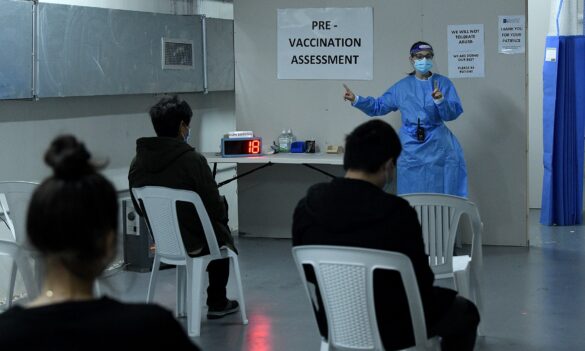
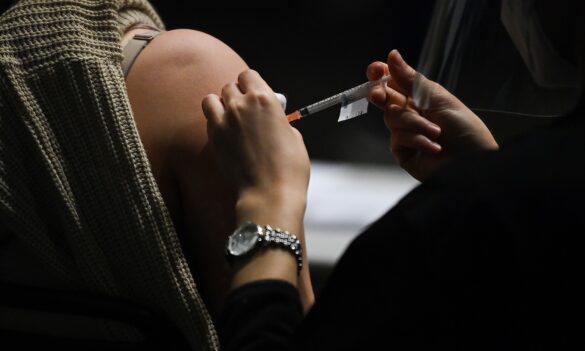
The PSA has received enquiries from members seeking further information on vaccinations and the workplace.
Mandatory vaccinations for certain diseases is not a new industrial development. PSA members in a variety of different occupations have been required to provide evidence of vaccinations against such diseases as Diptheria, Tetanus, Hepatitis B and Tuberculosis for many years.
Lawful and reasonable directions
The NSW Government has issued a circular which provides guidance for Government Sector Agencies regarding COVID-19 vaccinations for employees. The circular is available HERE.
A lawful direction is one that is within the scope of employment and involves no unlawfulness. In the context of determining whether a direction to receive a vaccination is reasonable (in the absence of a Health Order), a case-by-case analysis is appropriate. This would include:
Consideration of the nature of the work the relevant employee does;
The availability of vaccines to that person;
Their suitability for any available vaccination;
The risks of transmission associated with the work (including the vulnerability of particular persons they might work with);
How those risks would be reduced by vaccination;
How much time is given to comply with any direction;
Whether costs or losses caused by complying with the direction would be met; and
The amount of community transmission of the virus at the time the direction is issued.
What happens if I refuse?
Keeping in mind the above matters, members may be asking what can happen if they choose not to comply with such a direction. The simple answer is not complying with a reasonable and lawful direction can lead to disciplinary action. To further answer this question we must look to relevant and related industrial decisions.
Unfair dismissal
In a decision handed down in April, the Fair Work Commission (FWC) found it was reasonable for two employers, one operating in the childcare industry and one in the aged-care industry, to implement mandatory flu vaccination policies. The FWC upheld the dismissal of two employees who were sacked for refusing to receive a flu vaccine.
Whether an employer can require employees to be vaccinated will depend on the circumstances of the direction given, including whether mandatory vaccinations are necessary to ensure work health and safety in the workplace, and whether the workplace is considered a high-risk setting.
Work health and safety
A Person Conducting a Business or Undertaking (PCBU) has a duty of care to make sure employees and other people (including clients) are safe in the workplace.
As with all matters regarding employee safety, sufficient risk assessments must be completed prior to any direction regarding vaccinations. This has been confirmed by the NSW Government Circular, which states that Agencies must perform a risk assessment prior to giving a direction that employees must be vaccinated (and provide proof of vaccination) in the workplace to determine whether mandatory vaccination is lawful and reasonable.
Section 28 of the Work Health and Safety Act 2011 requires workers to:
(c) comply, so far as the worker is reasonably able, with any reasonable instruction that is given by the person conducting the business or undertaking to allow the person to comply with this Act, and
(d) co-operate with any reasonable policy or procedure of the person conducting the business or undertaking relating to health or safety at the workplace that has been notified to workers.
The Act also defines what is reasonably practicable in ensuring health and safety.
In this Act, reasonably practicable, in relation to a duty to ensure health and safety, means that which is, or was at a particular time, reasonably able to be done in relation to ensuring health and safety, taking into account and weighing up all relevant matters including:
(a) the likelihood of the hazard or the risk concerned occurring, and
(b) the degree of harm that might result from the hazard or the risk, and
(c) what the person concerned knows, or ought reasonably to know, about
(i) the hazard or the risk, and
(ii) ways of eliminating or minimising the risk, and
(d) the availability and suitability of ways to eliminate or minimise the risk, and
(e) after assessing the extent of the risk and the available ways of eliminating or minimising the risk, the cost associated with available ways of eliminating or minimising the risk, including whether the cost is grossly disproportionate to the risk.
Medical exemptions from vaccinations
Some people may have a medical condition for which receiving a COVID-19 vaccination presents a risk to their health. Under the current Public Health Orders, if you have a serious underlying medical condition, and you are issued a medical contraindication certificate from a qualified medical practitioner, you are exempted from the requirement to be vaccinated. You should seek medical advice from a qualified medical practitioner.
The Australian Technical Advisory Group on immunisation recommends pregnant women be routinely offered the Pfizer vaccine at any stage of pregnancy. For information about pregnancy and vaccines, see HERE.
The failure of the Federal Government to make vaccines available
There can be no doubt the Federal Government has bungled its responsibility to procure and make available the vaccine in a timely manner to Australians. This lack of availability to the vaccine must be considered if directions around mandatory vaccination are given.
Vaccination discussions in the workplace
The PSA understands that mandatory vaccinations remain a divisive issue, and encourages all members to maintain appropriate and respectful behavior when discussing the matter with colleagues, and your union.
Recently the PSA was contacted by your management to remove eight “vacant” Communication Officer roles from ROG, and to move them to the Police Link Command.
After an emergency meeting with your delegates, it was a unanimous decision that we say “No” to this proposal.
The PSA has been fighting understaffing in radio rooms for years – it is insulting to our members who worked understaffed during the horrific bushfire season of 2019, the following floods, and now during this pandemic, to suggest positions should be moved to another command, likely causing more staffing issues at these radio centres.
The PSA respect the role of a Communications Officer, and it’s time Police start respecting it as well. If you wish to get more involved, please contact a local delegate or a member of PSA staff listed below.
Announcing your workplace PSA Delegates – Crown Solicitor’s Office
Louise Coory and Nicholas Borger
Louise and Nick have been nominated by PSA members to help you in your workplace with any matters that you need assistance with. They are looking forward to working alongside PSA Organiser Alex Sala in supporting and representing members in making your worksite a better place to work.
PSA meets quarterly with CSO’s Management at Joint Consultative Committee meetings (JCC) to improve and strengthen the practices of communication, participation and consultation across the Crown Solicitor’s Office. Louise and Nick will be part of these meetings to raise our members concerns.
In relation to the ‘Message from the Commissioner 12 August 2021’, remember there are two parties to the Award negotiations the employer in this case the NSW Rural Fire Service (RFS) and employees represented by the PSA.
The role of the NSW RFS is to negotiate the best possible outcome on behalf of the NSW Government irrespective of employee interests. You may recall that the NSW Government introduced the NSWPublic Sector Wages Policy in 2011. It was updated in 2021. This policy restricts wages growth and stems Award negotiations as shown below:
3.2 Increases in remuneration or other conditions of employment that increase employee related costs by more than 2.5 per cent per annum can be awarded, but only if sufficient employee related cost savings have been achieved to fully offset the increased employee related costs.
7.4 Agencies must consult with Employee Relations on any proposal that may result in changes to remuneration or other conditions of employment.
7.5. The bargaining proposal must include details of proposed changes to wages and conditions of employment, reform measures and cost savings (including advice on how the delivery of each of the employee related cost savings will be quantified and reported), and details of the proposed negotiating strategy .Agencies must consult the Wages Policy Taskforce on any proposal that may result in changes to remuneration or other conditions of employment – including agreements negotiated under clause 10 of the Crown Employees (Public Service Conditions of Employment) Reviewed Award 2009 or any successor award – prior to commencing negotiations.
For the past three years the PSA and your Delegates have been negotiating on your behalf in good faith for a cost-neutral Award as required by the Wages Policy. Members of the Executive Team representing the NSW RFS have been sitting opposite your representatives representing the NSW Government’s interests. Hence the Award principles as presented to you landed where they did due to government policy and the rejection of numerous proposals put forward by the PSA by representatives of the NSW RFS Executive Team.
The NSW RFS Executive Team claims to honour your views and employment conditions, yet there is no mention of RFS employees in the Commissioner’s Nine Priorities. They will fight to win what suits them, not what is in the best interest of their employees.
Next step
Our commitment remains to improve and modernise the Award that better protects and compensates you and your colleagues for the work that you perform.
The PSA will continue to negotiate an improved Award for all members, and which may require the intervention and arbitration from the Industrial Relations Commission.
Your union remains committed to working to protect your industrial rights and highlight areas of concern where and when they arise.
If you need more information, contact the PSA, or one of your delegates(listed below. Further communications will be sent out in the coming weeks.
The COVID-19 pandemic is raising more concerns for members as it starts to make its way into the centres and court locations. Many members may not understand the role of the Command Post regarding contact tracing and how the Command Post works with Population Health and NSW Health.
The Commissioner has put out a direction 2021/36 Novel Coronavirus (COVID- 19) Interim Measure – Confirmation of authority regarding return to work following contact tracing in custodial environments.
An email was sent to Bathurst staff from Blake Conwell Commander COVID-19 Command Post with further information and clarity to the process. The email information is below:
The Command Post understands there has been confusion relating to the advice from NSW Health and then the following direction from the Command Post.
Clarification on Close Contacts Definitions & NSW Health Advice
In most situations, staff attending a COVID positive location in the community are advised by NSW Health that they are a ‘Close Contact’ and are automatically sent a text message informing them that they are to ‘self-isolate’ for 14 days.
NSW Health do not individually assess a situation, they, by default, only provide advice around 14 days isolation as a blanket rule. The way in which CSNSW work with Population Health is different to community close contacts, in that our environments and our interactions with each other and inmates are unique; this means that some information from NSW Health will differ slightly to that provided by the Command Post.
For some of you, this means you may not have to isolate for the 14 day period (depending on your individual situation), unless directed to by the Command Post, which is based off an individual assessment by Population Health.
Population Health and the Command Post have been providing advice to each individual staff member who has been assessed. This advice will inform you of any isolation and testing requirements. If you are advised that you are not required to isolate for any period of time, then you will informed, via email from the Command Post, and you will be eligible to return to work.
Staff that have been identified through the contact tracing process HAVE now been contacted directly by the Command Post and provided follow up advice in regards to the their level of exposure and next steps. All staff must adhere to the assessment made by Population Health and directions regarding isolation and safe return to work. These are communicated directly to staff via the Command Post on completion of contact tracing.
Any staff who have had a COVID test as a precaution and have not been contacted by the Command Post as a result of being a close contact, can return to the workplace following a NEGATIVE test result.
If any staff have not been contacted by the Command Post and believe they are a close contact, they should immediately contact the Command Post for advice.
Following formal advice from the Command Post (via email), if you are directed back to the workplace and choose to ignore the direction the following will apply;
You will not be eligible for special leave
You will be placed as Leave without Pay (LWOP)
Any additional leave arrangements will be at the discretion of your Governor or Manager
Please see Commissioner Instruction 2021-36 – Confirmation of Authority regarding Return to Work following contact tracing in custodial environments
Your Union is here for you
The PSA can be contacted for welfare and industrial support should members require it. Please engage and support your colleagues during this challenging and difficult time. Members who find that they are not coping or just need someone to talk to please do not hesitate in contacting Welfare Officer Trish O’Brien at or on her mobile 0412 120 391.
If you have additional enquiries or require industrial support, please contact the PSA Member Support Centre on 1800 772 679
Trustee and Guardian: Flexible working arrangement dispute
We believe that your flexible working conditions are important. When the PSA received information that NSW Trustee and Guardian (NSWT&G) staff were being denied flexible working conditions, the PSA took action and filed a dispute in the Industrial Relations Commission (IRC). This action was taken after the failure of NSWT&G to settle the matter with the PSA.
Due to the current COVID-19 lockdowns, the majority of NSWT&G staff are working from home and the worrying trend of denying flexible working conditions has eased.
Therefore, the PSA has withdrawn its dispute in the IRC.
We will continue to closely monitor the situation and will not hesitate to take similar action if the need arises in the future.
If any staff are experiencing issues with accessing flexible working arrangements, please contact the Member Support Centre on 1800 772 679.
“Jabs in jail” urgently needed as COVID-19 encroaches on NSW’s prisons
Prison officers are still waiting to get vaccinated even as COVID-19 case numbers begin to seriously test their efforts to keep NSW’s jails virus-free, with the union calling on Justice Health to reinstate the on-site vaccination rollout.
The Public Service Association said another round of workplace vaccinations for prison officer was urgently needed to make sure there isn’t mass spread inside any prison.
“Prison is up there with as a super spreading environment – once it gets in to the main population you’re in real trouble,” said Nicole Jess, president of the PSA and chair of the Prison Officers Vocational Branch. “But it is preventable – we need jabs in prisons now, it’s simple as that.”
While prison officers who had received their first dose were still able to get the second dose at work, those who had missed out in the first round were now being instructed to go to their GP or through a state-run hub. However, many prison officers, particularly those in regional NSW including Dubbo and Bathurst, were telling the union they couldn’t readily access the vaccine, despite being eligible as part of the phase 1b group.
The union said requests to NSW Health for another round of workplace vaccinations inside the jail had been rebuffed, as doses in regional NSW were now being prioritised for Sydney.
The union said while ongoing lockdown and rigorous isolation measures had managed to keep the prisons largely free COVID-19 they had also contributed to significant tensions within the inmate population.
“For 20 months prison officers have been working in tense jails, where people really are on a hair trigger. Now the government is thumbing its nose at their efforts, rather than delivering vaccinations to the workplace which would significantly reduce the stress and tension inside NSW’s jails.
“Prison officers want to be vaccinated, and for the stability of our corrections systems they need to be vaccinated, urgently.
“Effectively the government is telling them they’ve had their chance and now it’s on to them to sort it out. But it was the government’s changing advice that caused delays in the first place.
“An ongoing COVID-19 vaccine rollout, throughout the prison system must be a priority – particularly in regional NSW, where prisons are the largest employer.”
NSW Trustee and Guardian: Vaccinations for COVID-19 and your entitlements.
The PSA understands some members are unclear on entitlements and COVID-19 vaccinations.
Flexible working arrangements should be available to facilitate attendance at vaccination appointments, and additionally, access to Special Leave of up to two hours or an equivalent payment at the base rate of pay.
If a member sufferers an adverse reaction, they are entitled to access Sick Leave entitlements.
The COVID-19 pandemic is starting to raise concerns for members as it starts to make its way into the centres and court locations. Many members do not understand the role of the Command Post regarding contact tracing and how the Command Post works with Population Health and NSW Health.
The Commissioner has put out a direction 2021/36 Novel Coronavirus (COVID- 19) Interim Measure – Confirmation of authority regarding return to work following contact tracing in custodial environments.
An email was sent to Bathurst staff from Blake Conwell Commander COVID-19 Command Post with further information and clarity to the process. The email information is below:
The Command Post understands there has been confusion relating to the advice from NSW Health and then the following direction from the Command Post.
Clarification on Close Contacts Definitions & NSW Health Advice
In most situations, staff attending a COVID positive location in the community are advised by NSW Health that they are a ‘Close Contact’ and are automatically sent a text message informing them that they are to ‘self-isolate’ for 14 days.
NSW Health do not individually assess a situation, they, by default, only provide advice around 14 days isolation as a blanket rule. The way in which CSNSW work with Population Health is different to community close contacts, in that our environments and our interactions with each other and inmates are unique; this means that some information from NSW Health will differ slightly to that provided by the Command Post.
For some of you, this means you may not have to isolate for the 14 day period (depending on your individual situation), unless directed to by the Command Post, which is based off an individual assessment by Population Health.
Population Health and the Command Post have been providing advice to each individual staff member who has been assessed. This advice will inform you of any isolation and testing requirements. If you are advised that you are not required to isolate for any period of time, then you will informed, via email from the Command Post, and you will be eligible to return to work.
Staff that have been identified through the contact tracing process HAVE now been contacted directly by the Command Post and provided follow up advice in regards to the their level of exposure and next steps. All staff must adhere to the assessment made by Population Health and directions regarding isolation and safe return to work. These are communicated directly to staff via the Command Post on completion of contact tracing.
Any staff who have had a COVID test as a precaution and have not been contacted by the Command Post as a result of being a close contact, can return to the workplace following a NEGATIVE test result.
If any staff have not been contacted by the Command Post and believe they are a close contact, they should immediately contact the Command Post for advice.
Following formal advice from the Command Post (via email), if you are directed back to the workplace and choose to ignore the direction the following will apply;
You will not be eligible for special leave
You will be placed as Leave without Pay (LWOP)
Any additional leave arrangements will be at the discretion of your Governor or Manager
Please see Commissioner Instruction 2021-36 – Confirmation of Authority regarding Return to Work following contact tracing in custodial environments
Hopefully this clears up any confusion and if anyone has any issues please contact the Command Post, Natalie Howes or Nicole Jess for assistance.
COVID Posts
It is imperative that COVID posts are filled in centres and court locations. These posts are imperative as a line of defence to ensure protocols are being carried out and in keeping staff and inmates safe.
If there is issues with having posts filled in centres and locations please contact Natalie Howes or Nicole Jess.