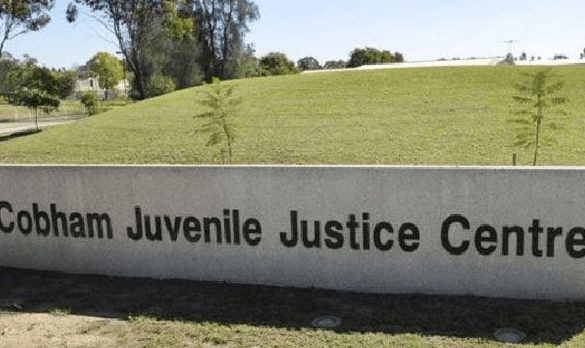
The Juvenile Justice Delegates Committee held an emergency teleconference on Friday 5 April 2019. Your delegates recommended ‘cease unsafe work process’ is to be utilised when appropriate. This was explained in the previous bulletin. Staff can cease unsafe work by using the following template found HERE.
During this meeting your Delegates also requested that PSA write (see HERE) to the Executive director Ms Melanie Hawyes to request information on what proactive steps the Department is taking to ensure the safety of staff and others and prevent workers from being continuously assaulted by detainees.
In response a meeting was held between the Department Executive and your PSA representatives Mr Gino Di Candilo and Mr Martin Robinson on Thursday 11 April 2019 where Occupational Violence in Juvenile Justice was discussed at length.
Both parties were in agreement that an Enhanced Support Unit was needed to improve the safety of all in Juvenile Justice and the Department is currently looking at a model in Victoria. It was also agreed that this was a long-term plan.
The focus of this meeting was on the current situation and what steps the Department is putting in place to resolve the ongoing violence that is occurring across most centres in the state.
The Department put to the PSA that it has reviewed the use of DRMPs; these have been upgraded and individualised, and staff have the ability to be involved in the development of the DRMP.
It was also stated that staff have a suite of controls they can use that are only restricted by legislation.
The Department would like to meet with the PSA on a more regular basis to discuss these controls at greater length and have invited the PSA to visit a number of institutions that also deal with the type of clients that Juvenile Justice deal with. The visits will be in early May and include: –
Sherwood House (FACS secure care)
Austinmer (Justice Health) Long Bay
Parkville and Malmsbury (Vic)
#comehomesafe
What can you do?
Ask a work colleague join the PSA today
Make the union strong by forwarding this bulletin to your colleagues
On 8 April 2019, representatives of the PSA met with representatives of NSW Police Force Security Management Unit to discuss the review of the Role Description for Special Constables. The result was disappointing. However, in subsequent discussions, management has agreed to further consider its position and respond in writing by 10 May 2019. The PSA remains optimistic that the process will still permit a successful claim for a regrade of the positions.
As advised in a previous Bulletin (see HERE), an agreement had already been reached on the wording of a new Role Description with the exception of the Capability Levels. The Role Description now contains references to law enforcement powers, which had previously been omitted.
With respect to Capability Levels, the current Role Description rates them all as “foundational”, which is the lowest, level. The PSA has made a detailed written submission, arguing that the levels of 5 capabilities should be raised from “foundational” to “intermediate”:- Display Resilience and Courage; Act with Integrity; Communicate Effectively; Demonstrate Accountability; and Technology. Under our proposal, the remaining 11 levels would remain at “foundational”.
The Commander of the SMU did not provide any written response to our submission, but stated that he did not agree that any of the Capability Levels should be rated as “intermediate”. This is hard to accept, as the Role Description for Sheriff’s Officers, a comparable position, has 2 intermediate Capability Levels. In the PSA’s view, the Commander has reached his conclusion on the basis of a very restricted interpretation of the Capability Framework rules.
The Capability Framework is based around administrative and clerical capabilities and it is very difficult to apply it to operational security roles. The PSA argued that the Capability Framework rules should be interpreted freely so as to be fit for purpose for assessing the level of capabilities required in the role. The Commander has agreed to provide a detailed response explaining how they have applied the Capability Framework by 10 May 2019. The PSA will carefully scrutinise the response before deciding how to proceed with our claim.
Members can rest assured that their PSA representatives will continue to vigorously pursue our claim for a Role Description and a pay scale which properly values the job of Special Constables.
If you require any further advice or assistance on this matter, or to organise a PSA meeting in your workplace, do not hesitate to contact:
Recent work by delegates at Penrith ROC has uncovered issues with overtime payments for civilian operators working on “User Pays” events. This win will result in affected members receiving backpay for instances where they were incorrectly paid.
Specifically, members working User Pays events were incorrectly paid their entire shift at time and a half. They should have been paid according to the standard Award overtime provisions of time and a half for the first two hours and double time after that.
The confusion stemmed from application of the section of the policy that was in fact only relevant to Police Officers:
Rate of Pay – Police officers employed on special events and commercial services (eg. wide load and other transport escorts, supplementary policing) will be paid their own substantive unloaded rate of pay, at time and a half. Commissioned Officers will be paid time and one half at the maximum rate of Senior Sergeant.
The relevant section of the policy covering User Pays charges for civilian staff states:
Unsworn Officers – Unsworn officers can be employed on user pays events and commercial service activities as support staff on non-police duties, such as radio operators. They are to work under their normal award conditions. The client should be charged as if a user charges police officer is performing that duty. (emphasis added)
The PSA has no agreement with NSW Police regarding User Pays events separate to the standard overtime provisions in the Crown Employees (NSW Police Force Administrative Officers and Temporary Employees) Award 2009, Clause 91.1:
91.1.1
Monday-Friday – All overtime worked by shift workers Monday to Friday inclusive, shall be paid for at the rate of time and one half for the first two hours and double time thereafter.
91.1.2
Saturday – All overtime worked by shift workers on Saturday, shall be paid for at the rate of time and one half for the first two hours and double time thereafter.
91.1.3
Sunday – All overtime worked by shift workers on a Sunday shall be paid for at the rate of double time.
91.1.4
Public Holidays – All overtime worked on a public holiday shall be paid for at the rate of double time and one half.
Delegates at Penrith did a fantastic job in pursuing this matter locally with the support of PSA Industrial Staff, despite initially receiving a negative response to their query.
The PSA has not yet confirmed whether this underpayment has occurred in other centres but encourages all members to check their payslips for any shifts worked on User Pays events. Any incorrect payment uncovered should be raised at a local level initially and members will receive the full support of the union in pursuing backpay.
If you require any further clarification on these entitlements, please contact:
Andrew Wright – Industrial Officer
It pays to be union! Not a member? Sign up HERE today!
What else can you do?
Give a copy of this bulletin to your colleagues or put it on a noticeboard.
It is important over the Easter period that members are aware when the gazetted public holidays are so they know if they are getting paid correctly. The following days are public holidays in April:
Good Friday, 19 April 2019
Easter Saturday, 20 April 2019
Easter Sunday, 21 April 2019
Easter Monday, 22 April 2019
Anzac Day, 25 April 2019
Members who are on recreational leave that covers part or all of this period do not need to use a day of recreational leave for any of the above days.
Shift workers on a flexible roster
Members who are shift workers on a flexible roster (anybody who receives one or more RLD per fortnight) have their public holiday entitlements governed by the Parameters for Flexible Rostering.
This allows that members may generally be rostered on a Public Holiday as follows:
Rostered on duty – paid at the rate of double time and a half (250%)
Rostered off duty rest – paid at the rate of an average additional day’s pay (100%) in addition to salary (i.e. 7 hours pay for 35-hour a week shift workers or 7.6 hours pay for 38-hour a week shift workers)
Granted shift free of work – such a shift is to count as one day’s work that week but no additional compensation applies
Rostered on a Recurrent Leave Day (RLD) – no additional compensation applies. Shift patterns however cannot be altered to avoid shift penalties.
Members are encouraged to check their rosters and subsequent pay to ensure they are receiving their correct entitlements.
Furthermore, any evidence of roster pattern manipulation aimed at avoiding shift penalties, in particular having members disproportionately rostered on RLDs rather than rest days on public holidays, should contact the PSA immediately.
The PSA has received feedback from members about increases in unsustainable workloads across Community Corrections. Your union is concerned that some members have been allocated as much as 160 hours’ work per month. This is well above a safe level of work allocation and puts PSA members’ health and safety at risk.
Community Corrections has a legislative obligation under the Work, Health Safety Act 2011 to ensure that you have a safe and healthy workplace. This includes having appropriate workload levels.
WHAT HAS YOUR UNION DONE?
As advised in PSA Bulletin of 12 March, your union met with management in February about workload concerns and other issues. See Bulletin HERE.
COMPLETE PSA SURVEY
As part of the ongoing effort to protect you in the workplace and push for fair and safe staffing levels, the PSA would like to hear from members about workloads.
Please take 5-10 minutes to complete our Workload Survey HERE.
The survey will close on Friday, 3 May 2019.
Please encourage all your workmates to fill out the survey. If they are not a PSA member, encourage them to join today.
ORGANISE A PSA VISIT
For any questions, or to organise a visit to your workplace, please contact:
Anne Kennelly A/Industrial Manager, Justice:
What can you do?
Ask a work colleague join the PSA today
Make the union strong by forwarding this bulletin to your colleagues
The PSA has been informed of a number of assaults on staff last week, including at Baxter, Cobham, and Riverina.
The extent of assaults, injuries on workers and workers’ compensation claims in Juvenile Justice is not acceptable. This demonstrates a failure to look after staff safety and was one of the factors that caused the Minister to authorise the current process of Managing Safety in Juvenile Justice.
Until this process is finalised, it is not acceptable for workers to continue to get assaulted in Juvenile Justice. Every worker has a right to come home safe.
Juvenile Justice has a “primary duty of care” under the Work Health and Safety Act to ensure the health and safety of all of its workers.
The Juvenile Justice Delegates Committee had an emergency teleconference on Friday 5 April 2019. Your delegates recommended the following cease unsafe work process is utilised when appropriate. This process is supported by the Work Health and Safety Act 2011 (WHS).
Section 84 of the WHS Act 2011 allows a worker to cease unsafe work. Unsafe work is defined as work that is a “serious risk to the worker’s health or safety, emanating from an immediate or imminent exposure to a hazard”.
The PSA has developed this form for you to use when taking this action to control risks from detainee violence or threat of violence.
Please take the following steps:
Immediate response
If an incident occurs when there is non-compliance by a detainee (e.g. non-following directions, abuse, threats, assaults etc.), follow procedures and restore order, apply first aid, and follow other emergency procedures.
Notification
Note the incident in CIMS for the detainee behaviour, and on SAP for the WHS record. Notify your supervisor from the Department and ask them what controls they can put in place. If the controls are not adequate to prevent an assault on staff continue with the following steps.
The Department should be assisting in assaults with charges being laid with the police.
If a worker was taken to hospital, then it is also a requirement to notify SafeWork on 13 10 50. This is the Department’s responsibility. However, workers can also call and notify SafeWork.
Risk management
If controls (e.g. DRMP) have failed and/or the Department have not provided additional resources/controls after notification and consultation to manage the detainee’s risk of violence, please download the cease unsafe work form, type in the details requested and modify as appropriate.
Contact your HSR or PSA delegate and have a meeting with your work colleagues about the form.
Once you are happy with the form, all workers should sign the cease unsafe work form. Please provide a copy to your centre management (or duty manager) once signed, and email a copy to .
Issue resolution
PSA will notify SafeWork NSW and get a WSMS number (case number).
Until the issue is resolved all staff should continue to maintain these control on the high risk detainee.
The PSA with staff will participate in consultation to assist in the issue resolution as per Section 81 WHS Act and SafeWork NSW may assist also.
Note: You are not on strike or placing work bans when you cease unsafe work, and you remain available to undertake other safe work. You are protected from discrimination under the WHS Act when you cease unsafe work.
#comehomesafe
What can you do?
Ask a work colleague join the PSA today
Make the union strong by forwarding this bulletin to your colleagues
Nominations are called for 5 Executive Committee Members for the above group.
NOMINATIONS AND CLOSING DATE:
Each nomination must be seconded by two other members in the same group as the nominee. Nominees, nominators and seconders must be financial members of the Association as at 29 March 2019.
Nominations must be submitted via the Survey Monkey link below:
Nominations will close on 30 April 2019. Forms must be completed via Survey Monkey by 5pm on 30 April 2019.
If there is a ballot, candidates who wish to have a profile available for voters to read should provide a brief statement of 300 words or less stating how they will best represent members’ interests.
Space is provided for this purpose on the form available through Survey Monkey.
J Campbell
for G R Bensley
Deputy Returning Officer
The Trustee and Guardian Advisory Group shall consist of 9 delegates from the electorates below:
ELECTORATE
TRUSTEE AND GUARDIAN LOCATIONS
PSA REGIONS
2019 Delegates
Required
Electorate 1
Parramatta
SYDNEY HO
5
Electorate 2
City (O’Connell St/Surry Hills
SYDNEY HO
1
Electorate 3
Newcastle and Northern Region (Combined)
HUNTER
(Newcastle)
NORTH COAST
(Lismore)
1
Electorate 4
Southern/Western Region (Bathurst/Broken Hill/Wagga Wagga/Wollongong)
BATHURST, WAGGA WAGGA, WOLLONGONG
1
Electorate 5
Office of Public Guardian (Downing Centre/Gosford/Parramatta
SYDNEY HO
HUNTER (Newcastle)
1
NOMINATIONS AND CLOSING DATE:
Each nomination must be seconded by two other members in the same electorate as the nominee. Nominees, nominators and seconders must be financial members of the Association as at 29 March 2019.
Nominations will close on 30 April 2019. Forms must be completed via Survey Monkey by 5pm on 30 April 2019.
If there is a ballot, candidates who wish to have a profile available for voters to read should provide a brief statement of 300 words or less stating how they will best represent members’ interests. Space is provided for this purpose on the form available through Survey Monkey.
J Campbell
for G R Bensley
Deputy Returning Officer
NSW POLICE FORCE (other than Special Constables and the Communications Group)
18 DELEGATES REQUIRED
The NSW Police Departmental Committee shall consist of 18 delegates and one representative from each of the following groups: Special Constables Advisory Group and Communications Advisory Group. Each representative will be appointed from and by the elected delegates of each respective group.
GROUP A ELECTORATES. Electorates 1 – 3 are described by function.
Members are required to restrict their nominations to the Group A electorates as described by function if they work within those areas.
GROUP A ELECTORATES
DESCRIPTION
DELEGATES REQUIRED
Electorate 1
Forensic Services Group
1
Electorate 2
Policelink
1
Electorate 3
Potts Hill
1
GROUP B ELECTORATES – Electorates 4 – 13 are described by location.
Members who are outside the function areas specified above are included in the Group B electorates. Should you be unsure about your electorate details, your current worksite address is sufficient.
GROUP B ELECTORATES
LOCATION
DELEGATES REQUIRED
Electorate 4
Metro Central (Police Region – incl. Sydney Police Centre who are not in the Communications Group)
2
Electorate 5
Metro North West (Police Region)
2
Electorate 6
Metro South West (Police Region)
2
Electorate 7
Metro Parramatta Headquarters
3
Electorate 8
Newcastle (Hunter)
1
Electorate 9
Lismore (North Coast) incl. Firearms Registry
1
Electorate 10
Tamworth (North West)
1
Electorate 11
Bathurst (Central West)
1
Electorate 12
Wagga (South West)
1
Electorate 13
Wollongong (South East)
1
NOMINATIONS AND CLOSING DATE:
Each nomination must be seconded by two other members in the same electorate as the nominee. Nominees, nominators and seconders must be financial members of the Association as at 29 March 2019.
Nominations will close on 30 April 2019. Forms must be completed via Survey Monkey by 5pm on 30 April 2019.
If there is a ballot, candidates who wish to have a profile available for voters to read should provide a brief statement of 300 words or less stating how they will best represent members’ interests.
Space is provided for this purpose on the form available through Survey Monkey.
J Campbell
for G R Bensley
Deputy Returning Officer
Issues raised before Commissioner Murphy are as follows:
Ongoing meetings for the Medical Escort Unit
MRRC submission
Lithgow – no reserves being rostered on for weekends. The effect this will have on meeting KPIs and purposeful day for staff and inmates
Issues register and its use in all centres
Concern that acting up is not being distributed evenly and that there is nepotism in most centres
VOR call sequence
MSPC – CSNSW proposal re the segregation unit being used for AA inmates and possibly separating the centre into two centres.
Benchmarking Meeting
We met on 27/03/2019 with CSNSW management and the following issues were raised:
Site Visits New Builds
Darren and I had attended South Coast CC to look at their new build. There are issues that need to be addressed for that centre and we have asked for the same process to happen in Shortland.
A tour of the Shortland new build has been organised for 03/04/2019. Any issues that arise from that tour will be addressed in the same format as we are currently doing in South Coast CC.
Mid North Coast will have the same process when it is closer to being completed.
Medical Escort Unit
CSNSW informed us that staff from Long Bay Hospital will not be forced to go to the MEU. Response from the EOI means that there will be enough staff to go and staff who do not, can be absorbed in the staffing numbers on the complex.
CSNSW confirmed that this is a pilot, originally for 6 months but they think it will probably go longer. If the pilot ceases and does not move forward staff can return to Long Bay.
AA Inmates
The proposal is currently with the Commissioner for consideration. CSNSW stated not to expect an outcome for up to two months. Once CSNSW have more information they will speak to the staff locally with the POVB Executive having involvement in all conversations.
Bathurst RIT Issue
Bathurst RITs are currently being conducted by a Functional Manager. Management are stating that the amount of RITs for the centre are equivalent to centres like SWCC and MRRC who have a stand-alone officer to do the role.
Statistics will be provided by CSNSW on how many RIT’s are actually being conducted and a meeting will take place with POVB executive, staff and Director Quarrie.
Acting Up
CSNSW have agreed that the acting up has not been distributed in a standardised process across the state.
A process will be developed to address this issue but some points that were discussed were as follows:
Each Governor/MOS of a centre will put out an expression of interest for SCO’s who want to act up.
From that expression of interest every SCO that does want to act up will have a one on one with the Governor/MOS to look at their ability to fill the roles.
If the Governor/MOS doesn’t think that the individual can complete certain roles the individual will have 6mths to be mentored/trained to do the roles.
This will be reflected on MyPerformance.
Any staff member that doesn’t want to act up will not be forced.
MRRC and Goulburn
CSNSW stated that Goulburn’s benchmarking document should be signed off soon by the Commissioner.
CSNSW stated that they are still working on MRRC proposal.
Issues Register
We raised that the Issues Register in some centres are having the issues entered however there is no outcome on them.
Every centre should have an Issues Register on their M Drive. Any issues that are occurring in the centre should be placed on that Register. Every month key stakeholders are to meet to resolve the issues. If the meeting is cancelled, we have requested that the meetings take place in that month and not just passed over to the following month. We have requested that when the meeting is moved that all stakeholders can be present for the new date.
We encourage members to put all issues on the Issues Register as it assists us if we ever need to take issues to the IRC. The Commissioner is very adamant that CSNSW address the issues in the centre locally however also agrees that the issues may be a collective issue around the state and the Register assists us in reflecting that.
VOR/Call in sequence
Members would be aware that a Call in sequence was agreed on over the Christmas period through concerns raised at the IRC. This came about due to staff at Long Bay having to do triple shifts and concerns over this period to fill vacancies. We did not want VORs in centres over the Christmas period.
CSNSW have come back to us to look at how we move forward to address the issues raised in the IRC re staff fatigue and where they want to implement a VOR.
We have asked for the following:
How many casuals worked over the 4 shifts and where?
How many staff worked more than 7 overtime shifts in a fortnight.
How many staff did more than 7 double shifts in a fortnight?
Once we get the information and the process that CSNSW are looking at implementing we will put it to the membership.
IRC Lozenges – Bathurst
The inappropriate use of Nicorette Lozenges – inmates smoking crushed up lozenges in a bong-type apparatus, has become an issue statewide. Bathurst had two staff go to hospital as a result of inhaling smoke when they entered a cell. Bathurst put bans on issuing any buy-up that had Nicorette Lozenges in them.
Due to the bans CSNSW took the issue to the IRC. Initially we were before Commissioner Constant and she tried to resolve the issue through conciliation. The parties could not reach agreement and a certificate of failed conciliation was issued. The matter was then allocated to Commissioner Murphy for arbitration.
In arbitration CSNSW relied upon a study by a Senior Environmental Health Officer, titled “Health effects of smoking ‘cigarettes’ made from nicotine replacement therapy lozenges”, dated November 2018. CSNSW argued staff were only exposed to low level amounts of smoke in the work environment.
PSA/POVB used the Department’s own document to highlight some of the serious health risks associated with inhaling tabaco smoke. Of the many risks, Siderosis (welder lung) stood out. We also argued Section 84 of the WH&S Act.
The PSA/POVB was able to achieve a positive result for members, NRT Lozenges will become contraband in all NSW Correctional facilities from 10 May 2019. Until that time inmates will only be able to purchase 1 packet each buy-up.
CESU Cyclic Roster
The POVB Executive have received from CESU management Draft Business Rules that have taken into account the issues that we and members raised. The POVB Executive will look at those Rules and see if they assist members in the CESU in getting flexibility in the roster. CESU are under a 209 formula which means there are not the reserves built in like in a 195 formula.
Some 24-hour court locations have requested a combination 12-hour/8-hour roster and the POVB Executive have stated that if the majority of the membership in those locations want that then rosters should be developed for members to see what that will look like.
CESU management have agreed that once the Business Rules have been completed then a visit to all locations will take place with management and POVB Executive representation to discuss moving forward. Those dates are yet to be arranged.
Visits
The POVB Executive have been trying to get out to as many centres and court locations as possible. There have been visits to St Heliers, Kariong, South Coast, Grafton, Lismore Court Complex and MNC. We will get to all court locations through the tour re cyclic rostering.
Disciplinaries
Any member that faces any disciplinary issue should contact Dave McCauley or David Bartle prior to writing any response. Their contact details are below. If you cannot contact them in the first instance, then contact one of the POVB Executive members and they will assist. Contact details are below.
Contact Details:
Nicole Jess – Chairperson
0427 609 199
Jason Charlton – Vice Chairperson
0401 500 976
Thor Sutherland – Country Chairperson
0447 633 476
Raylene Thompson – Secretary
0430-110-239
Natalie Howes – Secretary
0407 011 441
Darren King – Assistant Secretary
0407 935 039
David McCauley – POVB Industrial Officer
0419 022 767
David Bartle – POVB Industrial Officer
0418 425 976
As members will be aware, the Office for Police is being restructured.
There will be a members meeting next Wednesday, 10 April 2019 from 1pm to 2pm, Meeting Room 1, Level 4, 180 Thomas Street, Sydney. Members are encouraged to attend and voice their concerns.
If you cannot make the meeting, please contact your delegates or PSA staff. A copy of the letter informing the PSA of the restructure can be found HERE.
What can you do?
Ask a work colleague to join the PSA today
Make the union strong by forwarding this bulletin to your colleagues
Attend PSA meetings at your worksite
Get involved become a PSA Delegate
Your PSA staff –
Andrew Wright – Industrial Officer
Roland Harris – Organiser
A union workplace is a fairer workplace. Not a member? Sign up today!
PSA members at Community Corrections have raised the issue of work overload. The core of the issue is staff are carrying, and have been expected to carry, workloads in excess of the allocation model.
As members are well aware maintaining manageable caseloads is essential to maintaining quality service delivery and ensuring your health and safety. The nominal case load to align with these principals is 140 hours per period (130 hours caseload and 10 hours staff development).
Members noted some staff have been given hours well in excess of the 140 hours with some staff having between 170 and 180 hours allocated for extended periods of time.
If members have a high workload, it will affect the service delivery and their safety at work. Concerned members should raise the issue with their supervisor in the first instance by noting:
You have more than 140 hours per period (130 hours caseload and 10 hours staff development).
Ask that the excess hours get reallocated or a review be undertaken
Ask for written confirmation this will occur.
If you have requested a reduction in your caseload to align with the model and it has been refused you should:
Lodge a workplace incident report regarding excessive workload
Lodge a call with the PSA MSC under Communications workload.
We encourage all members to do this, because we need the evidence to raise it as a collective issue on your behalf.
Members noted there are other related issues that contribute to being allocated high workloads including, unfilled vacancies, staff on leave not being replaced and sentencing changes.
The PSA is developing a broader strategy around workload and a bulletin will be sent out to members shortly.
What can you do?
Give a copy of this bulletin to your colleagues.
Print this bulletin and put it up on your notice board.