Member Support Centre 1800 772 679

NSW Government abolishes specialist Kings Cross Adolescent Unit

MEDIA RELEASE     
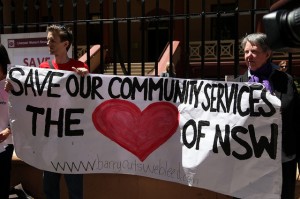
save our community services

23 May 2013
The Public Service Association of NSW has called an emergency forum today following confirmation the State Government will disband the specialist Kings Cross Adolescent Unit, a vital lifeline for the area’s at risk youth.

PSA Assistant Secretary Steve Turner said the Department of Family and Community Services had confirmed in a letter that the Unit’s specialist team would be split up, despite the demonstrated success of its targeted child protection services.

The move goes against recommendations of the Woods Special Commission of Enquiry into Child Protection Services calling for additional expert adolescent caseworkers to be appointed.

“The break up of the Kings Cross Adolescent Unit clearly shows the Government has no effective plan for tackling the serious issue of youth at risk on the streets of the Cross,” Mr Turner said today.

“For 27 years, the specialist team has reached out to tens of thousands of vulnerable kids and removed them from the danger of Kings Cross, including drugs, alcohol and prostitution.

“The stand-alone Kings Cross unit has been very successful in working with vulnerable teens and young people and removing them from the high-risk of the notorious crime and drug hotspot – before its too late.

“These caseworkers can’t tackle serious teen issues by working regular office hours or remotely – they need to be out on the streets at night speaking with vulnerable teens and offering assistance.

“The PSA urges the NSW Government to avoid disaster and guarantee the Kings Cross Adolescent Unit caseworkers can continue work as a dedicated unit,” Mr Turner said.

DetailsKings Cross Adolescent Unit
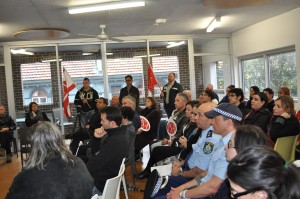
What: Emergency community forum against closure of Kings Cross Adolescent Unit
When: Midday, Thursday 23 May
Where: Wayside Chapel, 29 Hughes St Potts Point
Speakers:
Steve Turner, NSW Public Service Association Assistant Secretary
Laurie Matthews, Caretaker’s Cottage Youth Refuge


Contact: Steve Turner 0418 675 564  / Jane Garcia 0434 489 533 

PUBLIC SECTOR MANAGEMENT REFORMED TO FOCUS ON THE FRONTLINE

Download PDF:  PUBLIC SECTOR MANAGEMENT REFORMED TO FOCUS ON THE FRONTLINE

Barry O’Farrell MP
Premier of NSW
Minister for Western Sydney
MEDIA RELEASE
Wednesday 27 February 2013
PUBLIC SECTOR MANAGEMENT REFORMED TO FOCUS ON THE FRONTLINE
NSW Premier Barry O’Farrell today announced reform of public sector senior and middle management to better focus government resources on the frontline and improved services for communities across the state.
“These reforms will create a more professional public service, operating along best-practice private and government sector lines, that is better able to meet the needs of families across NSW,” Mr O’Farrell said.
“We want an innovative, professional and accountable public service which encourages and rewards performance and delivers the best possible frontline services for local communities,” he said.
“The NSW Government wants to reward talent, not time, in the public service.”
The NSW Public Service Commissioner has recommended significant reforms that build on the recommendations of the report of the Commission of Audit.
Cabinet has accepted the recommendations for reform including:

  •   rationalising the executive structure, reducing multiple layers of management;
  •   tightening up procedures to quickly and fairly deal with poor executive performance; and,
  •   streamlining legislation covering government executives in different agencies into a single act, while enabling organisations like the NSW Police Force, the Teaching Service and Local Health Districts to have independent arrangements aligned with the new reforms.

Under existing legislation, first written in 1902, the NSW public service operates two types of executive employment with some executives on 5 year contracts (Senior Executive Service), and others on awards (Senior Officers).
Under the reforms there will be a single system, with award and contract-based executives shifting to ongoing contracts with built-in rigorous merit recruitment and performance management provisions.
Executives will be appointed to a band – not a position – and a role within the band.
Research undertaken by the Public Service Commission has revealed a dramatic increase in the number of Senior Officers with the number increasing fivefold since from 280 in 1999 to more than 1,600 in 2012.
There are also another 640 ‘senior officer equivalents’ in other agencies that will be covered by these reforms.
The reforms will dramatically reduce executive management layers, improve executive accountability and help with better service delivery across the State.
In the NSW Public Sector approximately 16 per cent of executive level staff do not manage any people and, of the remaining who do, around 30 per cent only manage one to three people.
Under best practice in the private and government sector, a typical manager would oversight more than six people.
This reform was recommended by the Schott Report (Interim Report on Public Sector Management, January 2012):
‘The [Audit] Commission recommends the PSC should present reform proposals to the Government regarding the executive structure of the NSW public service (SES, SO and other executives) to:
. establish a separate structure for Directors General
. create a new executive structure combining the SES and the Senior Officer classification, and as appropriate, other executive grouping.’

MEDIA: Cameron Hamilton or Mark Tobin 9228 5239

Public Sector Reform

Reforming the public sector to deliver improved services to the NSW community

Arising from the Government’s support of the Commission of Audit’s recommendations, the Premier requested the Public Service Commissioner to review the NSW public sector, starting with the executive structure, and develop reform proposals to improve public sector management. There are two parts to these reforms: reform of the executive structure and reforms which will apply to the entire government sector.

The executive structure reforms involve consolidating the Senior Executive Service, Senior Officers and other executives into a single group and establishing a separate structure for cluster Director Generals.  The broader government sector reforms involve introducing more contemporary employment management practices.

Please see the information booklet and video provided along with the media release (PDF 205KB) and a sector reform question and answer (PDF 400.1KB) document.

More information will be made available here as the project develops over the coming months.

Public Sector Reform 2013 Brochure 26 Feb 2012 – FINAL

Government shouldn’t play politics with state’s parks

The NSW Public Service Association has condemned the announcement of the State government’s deal to expand shooting in national parks in return for Shooters Party support for the sale of electricity assets.

The union is concerned the explosion in shooting in 70 of the state’s 799 national parks and conservation areas will create additional risks and burdens for park rangers.

“The State government has once again shown itself willing to compromise our national parks and precious conservation areas for its own political interests,” General Secretary John Cahill said today.

“The attack on our national parks is in full flight with the Shooters and other interest groups knocking at the gate for greater access at the expense of the environment and the people who work in our parks.

“Our park rangers should not have to work in fear for their own safety and that of the community when these shooters take up arms in our parks. We’d hate to see park rangers, other park users and native wildlife placed in lethal danger.

“Our members are telling us they are stretched to capacity in many national parks – they don’t need an expansion of shooting activity taking them away from vital and important conservation work.

“This is another step towards the Shooters Party’s ultimate goal of recreational hunting in national parks. Our union remains totally opposed to recreational hunting in national parks which would severely compromise feral animal control programs run by park rangers,” he said.

Become a member today

JOIN NOW