Member Support Centre 1800 772 679

Union Examines Harassment Policy

Members receive further protections in the workplace.

At a recent Public Sector Industrial Relations consultative forum, the PSA CPSU NSW viewed a presentation from the Public Service Commission on the development of a model Sexual Harassment Policy for the sector.

The policy has been developed by the State Government after the People Matter survey results indicated significant numbers of respondents reporting an experience of sexual harassment in the workplace.

Many respondents were reluctant to report harassment as they felt there would be a lack of action if they made a formal complaint and there would be negative consequences in the workplace. They also felt unsure if their confidentiality would be protected.

“The policy has been sent to unions as a draft with the opportunity to provide feedback,” said PSA CPSU NSW Women’s Industrial Officer Simone Scalmer. “At first glance, there are concerns with the policy in that some of the language is not in line with a trauma-informed response, and that more needs to be done to look at workplace training and how to safely manage risk in the workplace.

“There also need to be steps to address the duty of agencies to work on eliminating the risk of sexual harassment.”

Accompanying the policy is a Commissioner Direction that each agency develops its own policy that draws on the sector-wide policy and has provisions that are above the minimum standards set out in the direction.

The deadline for development of these policies is 1 March 2024

National Parks and Wildlife Service Joint Consultative Committee update

National Parks and Wildlife Service Joint Consultative Committee update

The National Parks and Wildlife Service (NPWS) Joint Consultative Committee met on Tuesday 13 June to discuss a range of issues including:

Administration staff

The PSA has been advocating on behalf of NPWS administration staff in respect to workload issues since the Future Parks restructure in 2018. During the restructure, administration roles were deleted and created at lower grades. However, since the restructure, administrative staff functions have been gradually increasing.

The PSA requested branch conferences for administration staff to discuss workload and other issues currently affecting them.

NPWS has agreed to put out a survey to administration staff seeking genuine anonymous feedback on workload issues within the administration cohort.

The PSA supports this action, as it would give the Department a clear understanding of the issues that the PSA has been raising since the Future National Parks restructure.

Law Enforcement and ‘Risk E Business’ report

The PSA asked for an update on law enforcement including this report. The Department promised to release a summary of the report and an action plan.

Incentives for working in western locations

The Department advised that some of the strategies being applied to encourage recruitment of staff out west include developing partnerships with local educational institutions; access to government housing; short term acting stints; promoting extra allowances; removal of payroll restrictions to remote area allowances. Also promoting job opportunities out west on social media.

Change and Machinery of Government

There is (so far) no indication as to how NPWS business will change with the change of government and possible Machinery of Government (MoG) changes. However, the meeting was advised that the budget climate will be ‘difficult’ with no detail as to the impact on the NPWS budget. The Minister’s office still has some vacancies ,so expect a few more months of uncertainty. NPWS continues to work with the PSA on wild horse issues impacting members. This continues to be an ongoing issue with support being provided to affected members by both the department and the PSA. To date, there’s been no recruitment for the Great Koala National Park.

Work Health and Safety update

Cat 9 vehicles will have a brake safety upgrade for current vehicles and new vehicles will come with upgraded braking systems. PPE for noise mitigation will be inspected and checked for suitability. Noise testing will be undertaken over the next six months.

An updated men’s health page will be on ParkSite. More people die from suicide than in motor vehicle accidents, disproportionally affecting men (75 per cent) and Aboriginal people (twice as likely).

Recruitment update, including the filling of 250 new roles

NPWS updated the meeting advising that 219 roles have been filled. Eighty-six per cent have been filled internally; with a 50/50 split on temporary/ongoing roles. FOGO roles are being ‘rested’ until their future is resolved. Of the roles filled 33 are Aboriginal and 63 women. Some individuals were directly appointed with no explanation given as to why this happened.

With the ongoing recruitment of temporary staff, the recruitment churn continues to create significant delays in recruitment action being completed (in spite of the fact that an additional five staff have been placed into talent acquisition). Further to this some staff who applied for the 250 roles are yet to be provided with any information as to the outcome of recruitment action.

Digital device issues

There are many issues with digital devices across NPWS. The meeting was advised that this is not just specific issue for NPWS. Issues with such devices is affecting the broader DPE cohort. The matter will be referred to the DPE JCC.

Leave balance issues

The 30-day ‘limit’ on leave accrual is being translated locally as 210 hours in spite of some staff working eight-hour days (which equates to 240 hours). However, the award only refers to ‘weeks’ not ‘hours’. Also a proportional amount of days or hours should be applied to part-time staff.

Further advice on this matter will be provided by the Department.

National Parks Vocational Branch bulletin

National Parks Vocational Branch bulletin

 The National Parks Vocational Branch met on Tuesday 9 May to discuss a range of issues including:

Special Investigations Unit and Law enforcement in the National Parks and Wildlife Service

Further discussion was had on the resourcing of this unit and where it should sit in the Department of Planning and the Environment. The National Parks Vocational Branch (NPVB) believes it should be moved into the National Parks and Wildlife Service (NPWS), as 90 per cent of its work is NPWS business. It should report to an Executive Director and its resources be increased. The unit continues to struggle in dealing with a significantly increased workload, with only a handful of officers in the unit. The NPVB also continues to advocate for additional staff to be added to this unit. There should be one Special Investigator for each branch and the unit should have additional support staff.

Vertebrate Pest Control Program

We are reinforcing our previous messages to members on the provision of overtime for this program. Overtime is available to members involved in this program who work additional hours. Please submit your claims to your supervisor and advise the PSA if your claim is not approved and/or paid.

Task Based Assessment for fire fitness

A PSA bulletin has been circulated on this matter. However, please be advised that the PSA’s position is that medical retirement is NOT an option for those that the department deems necessary to ‘medically retire’ if they cannot undertake the moderate Task Based Assessment (TBA). There are plenty of other fire roles for these members to perform at such incidents that do not necessarily require a moderate TBA.

Women’s representation

NPVB Women’s Representative Naomi Goosen met with staff at Hill End to discuss Work Health and Safety (WHS) issues with the Blue Mountains Branch WHS committee. Tony Clark is the BMB HSR on the committee. The meeting was advised that the Minister for the Environment, The Hon Penny Sharp MLC, has indicated that there should be gender parity on these committees.

Ranger Competencies Working Group

NPVB Chairperson Ben Owers is on this working group. The focus of the group is to streamline the competencies as many are outdated and training no longer exists for some of the competencies. The group is currently drafting a new set of competencies for consideration. The PSA will continue to be an active participant in the group.

Aboriginal Ranger Trainee Program

The PSA has been approached by NPWS management about ways to support Trainee Rangers. Most importantly, the issues surrounding tertiary qualifications for participants; type of qualification and how they are supported to attain such qualifications. The NPVB believes participants need strong support from NPWS; the tertiary institutions and mentors to undertake their studies successfully. This has been lacking in previous attempts to develop such a program. Under the NPWS Award trainee Rangers should be given the opportunity to complete a three-year degree while gaining work experience.

Senior Field Officer roles recruitment process – Kosciuszko National Park

There has been a range of issues with the recruitment of these roles, specifically with the timeliness of the process and applicants not being advised of the outcomes of the recruitment process. Applicants were not advised that both the Blowering and Jindabyne roles had not been filled until such time as an email was circulated by management to all staff on the outcomes of the recruitment process.

Administrative workloads

The meeting discussed the continuing and significant increase in the administrative workload in branches. Some branches are now tasking their administrative staff with ordering all PPE for fires for the branch. This is an onerous task that should not be dumped on the already overworked and under resourced administration staff.

The 2018 Future National Parks process has been an abject failure when it comes to administrative staff workloads. The PSA would like to hear from administrative staff who perform duties outside their role description and/or beyond their capacity to complete such tasks.

As the PSA continues to raise these issues, we require examples where these excessive workloads exist. The PSA understands that these issues are not limited to one branch but are a common concern across the state therefore any feedback from members will be treated in confidence.

Better Bargaining Can Cut Gender Wage Cap

Multi-employer deals can reduce disparity in salaries.

Multi-employer bargaining in the federal industrial relations system will strengthen equal pay laws, making it easier for women, especially in women-dominated industries, to address systemic unequal pay, claims a report from the Australian Council of Trade Unions (ACTU).

The report, Reducing the Gender Pay Gap with multi-employer bargaining; outlines how the Secure Jobs, Better Pay Bill will make a substantial difference in closing the gender pay gap, which has recently expanded after stalling in the final five years of the Liberal National Government in Canberra.

The Bill strengthens equal-pay laws. The report also finds that improving collective bargaining will also make a substantial contribution to closing the pay gap. Women on collective agreements currently earn $102.60 per week more than women who are not, and workplaces with a collective agreement have smaller gender pay gaps than those without.

The Bill’s main multi-employer bargaining streams would also help close the gender pay gap.

Of the eight industries with the highest gender pay gaps, seven would likely be covered by single-interest multi-employer bargaining, while sectors such as aged care, early childhood education and care and administration and support services – which would benefit from the supported stream – are dominated by systemically underpaid women.

The report also finds that the 12 countries with higher rates of multi-employer bargaining than Australia have an average gender pay gap of 10.5 per cent compared to Australia’s 15.3 per cent, using the OECD measure of median full-time earnings from 2021.

Domestic and Family Violence Leave Entitlements Doubled

Improved conditions will also cover casual workers.

Public sector employees are now entitled to 20 days’ Domestic and Family Violence (DFV) leave per calendar year.

The new entitlement is a significant increase on the previous entitlement of 10 days per calendar year and is open to casual employees. It can be taken in part days, single days, or consecutive days.

“Unions, including PSA/CPSU NSW, have lobbied over the years for further improvements to the DFV leave entitlements and advocated for 20 days leave per calendar year as well as support for casual employees, who are overwhelmingly women, to be included in the entitlement,” said General Secretary Stewart Little.

The PSA/CPSU NSW was a pioneer in this space, getting DFV Leave into an Enterprise Agreement at the University of NSW in 2011. Soon after, Public Sector workers in NSW had DFV provisions in their Award.

“Last year, Federal Parliament passed a bill that enshrined 10 days’ paid FDV Leave as a workplace right for every worker in Australia,” said Mr Little.

“This would not have been possible without the previous decade of campaigning by the union movement and activists for better support in the workplace for employees experiencing violence in the home.

“Over the past decade, improvements in provisions for employees experiencing domestic violence have been won slowly, workplace by workplace, agreement by agreement, then in Awards, and now, in the National Employment Standards.”

The leave is not pro-rated for part-time and casual employees. Casual employees can access the leave for any shifts already rostered for that they cannot attend due to domestic and family violence.

Pre-approval is not required to access the leave and there is no requirement to exhaust other leave types before accessing DFV leave.

Leave should be paid at the full rate the employee would be paid had they not accessed leave, and no adverse action should be taken due to the need to take DFV leave.

Personal information concerning an employee’s experience of domestic and family violence, and any actions and supports offered by the employer, should be kept highly confidential.

Information will not be kept on the employee’s personnel file and information to others will be provided on a need-to-know basis. The affected employee will be fully informed of where the information will be stored, who will have access and who will be informed and why. Under no circumstances should DFV Leave taken be recorded as such on a pay slip or any other personal documentation.

Time’s Up For Closing The Gender Pay Gap

Australia’s superannuation system is the envy of the world. Let’s make sure it works for everyone.

We need to talk about 3:56pm. At first glance, it’s just another time in the day, right? One minute in 1440 of them that pass by with every full rotation of the Earth.
But 3:56pm isn’t any ordinary time.

It’s the time at which Australian women, mathematically, start working for their employers for free each day while the wage counter keeps ticking over for their male counterparts.

Aware Super has crunched the numbers and established that’s the time when women effectively stop getting paid.

The finding is based on a 9-5 workday and the most recent Workplace Gender Equality Agency (WGEA ) pay-gap analysis, showing Australian women working full-time can expect to earn 13.3 per cent less than their male colleagues in the same roles.

Almost a quarter of the way through the 21st Century, it’s a shameful state of affairs.

As the Federal Minister for Women, Senator Katy Gallagher, has noted, Australia’s gender pay gap means women are effectively losing out on $51.8 billion in pay every year. To put that another way, they’re doing $51.8 billion worth of work for their employers every year for free.

Aware Super, which has more than 700,000 women among its 1.1 million members, launched a campaign this month – coinciding with International Women’s Day – to heighten awareness of the issue.

It has designated 3:56pm as Pay Gap O’Clock, in the great tradition of Wine Time or Beer O’Clock.

Aware Super Chief Executive Deanne Stewart, a Pay Equity Ambassador at WGEA, says it’s critical employers across both the public and private sectors take more steps to close the pay gap.

“At the employer level, initiatives such as pay equity audits, and gender pay equity policies that are available to all staff, are simple but important steps towards closing the pay gap,” Ms Stewart says.

“Transparency is crucial as it enables all organisations to be held to account on their actions and reduces the potential for ‘pink washing’.

“Employers should also have policies in place to enshrine that women and men be paid equally when they have equal jobs. This is particularly important for women entering the workforce to ensure they’re not on the back foot from day one.

“Paid parental leave and a super guarantee on both paid and unpaid parental leave can help to close the gap when women leave the workforce to have children, and affordable and accessible childcare is key to allowing full participation in the workforce when they return.”

While 3:56pm is the national Pay Gap O’Clock, the fund has also used WGEA data to calculate Pay Gap O’Clock for women on a state-by-state basis, and across 17 industry sectors as categorised by the ABS.

For women in Western Australia, which has the biggest gender pay gap of all the states and territories, Pay Gap O’Clock is a staggeringly early 3:14pm.
Meanwhile, for women in the professional, technical and scientific services sector, Pay Gap O’Clock arrives at 3:18pm.

Aware Super’s campaign comes after the Federal Government last month introduced the Closing the Gender Pay Gap Bill into Parliament.
The bill will require employers with 100 workers or more to publicly disclose their gender pay gaps.

Ms Stewart says the gender pay gap is the single largest contributor to the disparity in super balances between men and women.

On average, Australian women retire with 30 per cent less super than men, according to the Australian Burea of Statistics.

Lower pay creates a “domino effect of disadvantage for women” that runs through their working lives and then into their retirement, Ms Stewart says.

The fund’s analysis shows that due to the compounding nature of superannuation, every single dollar contributed to the fund of a young worker now is worth $4 in retirement.
It’s a bitter pill to swallow for the Australian women working for free each day from 3:56pm.

International Women’s Day 2023 – Raising Up For Equality

International Women’s Day 2023 – Raising Up For Equality

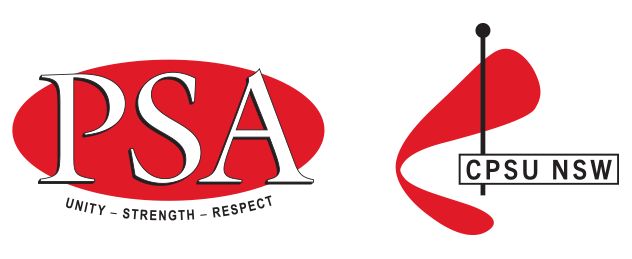
Wednesday 8 March 2023 is International Women’s Day (IWD). This year the theme is Embrace Equity. The theme for Unions NSW IWD is “Raising Up for Equality”.

The PSA CPSU NSW supports the celebration of women each year and IWD gives us the opportunity to reflect on the achievements we have reached in the fight for women’s rights and gender equality. It also encourages us to come together and consider the battles that still need to be fought!

Your union, the PSA CPSU NSW has fought for equal pay, equal access to job opportunity, paid parental leave and job security, flexible work hours, family and community service leave, lactation breaks and in the last year achieved with other unions 20 days paid domestic violence leave and improvements to paid parental leave entitlements.

International Women’s Day is also about the celebration of women worldwide and the promotion of economic empowerment, gender equality and basic human rights.

Events

‘Women in the Union’ – Training course at PSA House on International Women’s Day

Come and celebrate IWD with other women union members at PSA House by registering for our course ‘Women in the Union’ to be held on International Women’s Day, Wednesday 8 March 2023. You can register HERE.

You will learn about the important role women have and play in building strong unions. You will explore the history of women’s participation in the workforce and the union, dealing with workplace sexual harassment, power, and assertiveness.

You will learn about your rights, entitlements, and responsibilities in the workplace. You will learn about the barriers still facing women in the workforce today and explore the reasons behind pay inequity. You will become more familiar about public sector flexible work practices. You will leave empowered to change your workplaces to be more equitable toward women.

Consent warning: this course contains discussion of sexual harassment and assault. It’s not graphic, but it can be triggering if you’ve experienced it. Enrol with caution if you think it may affect you.

International Women’s Day March in Sydney

The PSA CPSU NSW, alongside other unions and women’s organisations will be rallying together and marching from (11am) at Sydney Town Hall to Hyde Park on the Saturday 11 March in celebration of IWD.

Look for the PSA CPSU NSW flags on at Sydney Town Hall. Some will be red, white, and black, others will be purple with PSA CPSU NSW WOMEN on them.

Join with us to celebrate and show your pride in your union and its achievements.


Aware Super – The Super Women Webinar series

Aware Super has developed The Super Women webinar series to support the financial wellbeing of women members and provide tools and information for women who are keen to make changes that will improve their financial situation.

Taking place to coincide with International Women’s Day, this program will run for 3 days from Tuesday 7 March to Thursday 9 March, with 15-minute sessions that you can opt-in to scheduled at convenient times throughout each day.

IWD is a timely reminder of the fact that women still face unique challenges when it comes to money. On average, women earn less than their male counterparts and generally have lower super balances. We encourage women members who are interested to make use of these valuable resources.

You can access further information about these sessions HERE

Aware Super Topics Poster

Aware Super – International Women’s Day Poster


Expressions of Interest Now Open Women’s Council Committee Casual Vacancy   Electorate 7 – Customer Service

Expressions of Interest Now Open Women’s Council Committee Casual Vacancy Electorate 7 – Customer Service

We are calling for Expressions of Interest from financial women members employed in Electorate 7 Customer Service, who are interested in filling a casual vacancy that is available on the Women’s Council Committee 2022 – 2024.

How to apply

To be eligible you must be a financial member of the Association as of 26 January 2023

Please use the link below to express your interest for the position.

https://www.surveymonkey.com/r/WCCE7

EOI will close at 5pm on Monday, 13 February 2023.

Nominations and seconders can be included but are not required.

However to assist Womens Council, a 300 word statement on how you will best represent members’ interests should be included.

Alethea Wilkinson
for GR Bensley
Deputy Returning Officer

Working Women Save A Nation

A project helps those struggling in an emerging economy

Union Aid Abroad’s Women Worker’s Rights Through Stronger Trade Unions project in Cambodia is increasing women workers’ access to labour rights.

The group works with the government and three unions that represent urban women workers.

These unions are the Cambodian Food and Service Workers Federation; representing hotel and restaurant staff and the large number of women involved in food processing; the Building and Woodworkers Trade Unions of Cambodia; representing women employed in construction; and the Independent Democracy

of Informal Economy Association, representing workers such as street vendors, waste collectors, domestic workers and tuk-tuk drivers.

Insecure Work Blights Workers’ Lives

Too many people are employed in conditions of uncertainty.

It is a holding pattern too many PSA/CPSU NSW members are trapped in and want to leave: insecure employment.

“Insecure work is one of the biggest issues our union faces,” said General Secretary Stewart Little. “Many of our members have been placed in so called ‘temporary’ roles for years – even decades – at a time.”

Adverse consequences of insecure employment include being shut out of financial services such as home loans or credit.

“If a lender sees someone is working in an insecure manner, such as casual work or employment through an agency, they will be less likely to give them a loan,” said Mr Little.

Speaking at the 2022 PSA/CPSU NSW Women’s Conference, State Library member Adria Castellucci (pictured above right) said temporary contracts were the biggest issue facing members in cultural institutions such as the State Library and the Australian Museum, where she had been employed previously.

“Most of these roles should be permanent,” she said. “They are operational roles that have ongoing work attached to them. The problem is chronic underfunding and under-resourcing.

“It results in people being strung along with back-to-back contracts. And eventually, when people leave, there is no succession planning because one person with a lot of institutional knowledge gets sick of it and leaves.”

Ms Castellucci said sometimes when a contract expires, institutional knowledge also walks out the door with the temporary employee.

She said insecure work is also bad for workers’ mental health, with the pressure to constantly prove you are worthy of a new contract taking its toll.

Certain agencies are problem areas for over-reliance on insecure work.

Industrial Officer with the PSA/CPSU NSW Jessica Epps said TAFE is very keen on turning on and off a supply of insecure employees, particularly women.

“We have people working for two-year contracts, never sure if they will be rehired once it expires, or if the position will even exist after what seems like an endless series of restructures,” she said.

Similar issues face members employed in universities.

PSA Senior Vice President, Juliette Sizer, said tying positions in schools to enrolments has created a large number of workers in insecure roles. School Learning Support Officers, for example, are often employed on a year-by-year basis depending on how many children with specific needs are enrolled.

The State Government has proven that it can turn its back on excessive reliance on insecure workers.

Speaking at the conference, Prison Officers Vocational Branch Secretary Natalie Howes (pictured above left) said casualisation was introduced in the Correctives system “as an incentive to privatise Parklea, Cessnock and Court Escorts”. Ms Howes said once the privatisation process, which saw Parklea move to a commercial operator, was over, the proportion of casual Officers has declined, with more staff being given full-time, permanent work.

Ms Castellucci said for “prestige” employers, such as cultural institutions use the allure of working for them to convince people to remain in temporary roles. In addition, some positions, such as Curators, don’t have a lot of other employers they can go work for, so they are more likely to grudgingly accept insecure roles.

Your Ideas Your Kudos

Too many women let other colleagues take credit for their work.

Many women workers will know the feeling: an idea they put forward in a meeting that was barely acknowledged is later floated as an initiative from a manager or colleague.

“It is bad enough too many of our women members are talked over in meetings and don’t have their ideas taken seriously,” said PSA/CPSU NSW Women’s Council Chair Leanne Smith, who has experienced “idea theft” several times throughout her career.

“It is even worse when a colleague later puts forward the idea themselves.

“Too many women are conditioned to keep quiet, which leaves them vulnerable to being usurped by other members of staff.”

Research by Cornell University in the United States estimates nearly 30 per cent of all workers “report having had an idea stolen by a colleague, at least once”.

“The problem with this is that your future prospects for promotion may be at risk if your ideas are hijacked by another person you work with,” said Ms Smith.

Solutions to ‘idea theft’ include speaking up as soon as possible to claim the idea as yours.

Writing in Forbes magazine, business consultant Caroline Turner recommended, “Women can practise speaking up more; they can learn to interrupt, hold the floor, and speak with greater confidence and power.

“Both men and women can notice when a women’s idea doesn’t get the reaction it deserves. They can endorse the idea and give credit where it is due if another person ‘steals’ the idea.

“We need to be grateful to those men and women who speak up, generate discussion on good ideas presented by women, and recognise the source of the idea.

“The result is more engaged women – and more good ideas.”

Union Looks To Enlist More Retired Women

Women who have left employment in the Public Sector have been urged to keep in touch with their union by becoming members of the PSA/CPSU NSW Retired Associates.

Women who have left employment in the Public Sector have been urged to keep in touch with their union by becoming members of the PSA/CPSU NSW Retired Associates.

Secretary of the Retired Associates, Carmel McKeough, said the group is keen to increase female membership.

“With the challenges facing women in retirement, due to the gender pay and superannuation gap, the input of more women members would be welcome,” she said. “We meet every two months at PSA House in Sydney and members can also join the meetings via Zoom.

“We’d like to see more retired members campaigning at the state election. Our members all over the state can help convince voters to elect politicians who can best represent PSA/CPSU NSW members.”

Become a member today

JOIN NOW