Want to learn more?
Visit the Osara Health landing page for further information and access to the two enrolment methods for either program: www.osarahealth.com/en-AU/psacpsunsw or reach out to

Public Service Association of NSW (PSA) General Secretary Stewart Little has condemned the use of threats, such as arrest by the Upper House of the NSW Parliament, in its dealings with ministerial and public sector staff.
The PSA represents ministerial staff in NSW.
“The PSA is appalled that ministerial staff are being used as political footballs and threatened with arrest for simply doing their jobs,” Mr Little said.
“The power of arrest is one that the Constitution grants to the courts, not to Parliament.
“It is unacceptable that workers are being met with such threats in the course of their employment.”
“Politicians and departmental heads are fair game, not public servants and staffers.
“Our members deserve respect and dignity in their work, not to be dragged into political fights.
“Staff need more protection, not more intimidation.
“No public sector employee should ever be placed in this position.”
Mr Little said the Association will continue to advocate for stronger safeguards to protect staff from political interference and ensure all employees are treated fairly.
Contact: Tim Brunero 0405 285 547
Women’s Conference celebrates nearly a century of fighting for equality.
The 2015 Women’s Conference celebrated Women’s Council’s 95th birthday, looking back at famous victories and planning for future wins.
During an upbeat Welcome to Country, Binowee Bayles of the Metropolitan Local Aboriginal Land Council gave attendees an impromptu language lesson and talked about the role strong women played in Aboriginal culture.
Her welcome was followed by messages from Women’s Council Chair Leanne Smith and General Secretary Stewart Little on the role Women’s Council has played in combatting inequality in the workforce.
“Our work gets results,” said Mr Little. “Our workplaces are starkly different to when the PSA was formed in 1899.”
He cited the end of the marriage bar, pay inequality and “jobs for the boys”, as well as landmark pay equity cases in libraries and schools.
PSA CPSU NSW President Nicole Jess talked about history of walking together and the importance of voices being heard. She thanked women who came before her, such as former President Sue Walsh, who attended the event.
Vice President Shelley Odewahn introduced a 10-minute documentary on the history Women’s Council. The documentary, which is available to download on the PSA and CPSU NSW websites, gave a brief history of the Council, including its trailblazing win, getting domestic and family violence leave into an Enterprise Agreement before any other union. It also gave details on pay-equity wins and unsuccessful attempts from within the union to get rid of Women’s Council.
The documentary was followed by a panel talking about the history of Women’s Council. Senior Organiser and former Women’s Industrial Officer Anne Kennelly talked about huge strides made in 20th century, going from a world where “women did not work: women got married and women had babies” to today where they make up more than half the public workforce in NSW. She also talked about barriers encountered by Aboriginal women who wanted to work for the public sector for much of the last century.
Ms Kennelly gave detail on how the PSA fought to end the marriage bars and wage inequality embedded into awards, which limited women’s wages to 54 per cent of what men earned for the same work. As Ms Kennelly pointed out, formidable Delegates such as Jean Arnot from the State Library helped usher in equal wages for equal work, regardless of the employee’s gender.
Shabnam Hameed, who had served a brief term as PSA CPSU NSW Women’s Officer talked about how the Australian Family and Domestic Violence Clearing House wanted to use industrial provisions to get change through to workplaces leave provisions, which is what the PSA did when it got such entitlements into an Enterprise Agreement at the University of NSW.
Panellist and State Library Delegate Trish Leen said, “Equal remuneration for equal work did not happen in a vacuum”, but rather needed to result from change-focused organisations such as the Australian Labor Party and the PSA CPSU NSW.
Ms Leen talked about the ground-breaking Librarians case, where “they compared geologists and librarians. Geology was male-dominated and libraries were dominated by women” and awarded a 20 per cent pay increase to Librarians and Archivists.
“Even today: women’s work is demeaned,” she said. “Look at childcare workers.”
Ms Leen said the case should serve as a blueprint for future women looking to address institutional sexism.
“Be tenacious,” she said. “Get hold of something and don’t let go, because it can take years.”
Former tennis professional Jelena Dokic wowed the crowd with her story of surviving abuse at the hand of her infamous father. Despite her on-court achievements, including grand slam semifinals and a top world ranking of number four, Ms Dokic said her proudest achievement was “finding my voice” after years of domestic abuse and racist vitriol when she moved from Serbia to Australia.
After making “a difficult decision to escape home and run for my life”, Ms Dokic still had to hire security to keep her father away during tournaments. However, mental health struggles took a toll and, after a suicide attempt at the age of 22, Ms Dokic retired from the game she “absolutely loved” and had excelled at since first picking up a racquet at the age of six.
“I asked myself, would I ever be able to live a normal life,” she said. “Then, about a year into my retirement, a deal landed on my manager’s desk to write a book.
“I just wanted to tell my story to help someone: I had to talk about all the abuse I went through from my father and my mental health struggles and 13 months later, my first book, Unbreakable came out. She also overcame reticence to speak and poor social skills to embark on her new career as a tennis commentator and public speaker.
“This was the day my life changed. Nothing compared to this, I was finally free.”
Since then, Ms Dokic has released another book about “the light at the end of the tunnel”.
“It’s about the power of community,” she said. “Open conversations lead to change.”
With her new-found voice – a third book is on its way – she compared the self-belief required to compete in sport with everyday life: “to have any chance to get through you have to believe it”.
“Fall down a million times, it doesn’t matter,” she said. “What matters if you get up a million and one times.”
“I’m not a victim,” she said summing up her presentation. “I don’t want people to feel sorry for me and I don’t want people to feel pity for me.
“Shame needs to change sides. Shame shouldn’t go to the victims and survivors. Shame needs to go at the abusers and perpetrators.”
Mihajla Gavin of the University of Technology Sydney Business School discussed workplace responses to domestic and family violence and the importance of ensuring it is not considered “a private issue”. Speaking at a conference organised by the first union to get family and domestic violence into an Enterprise Agreement, Dr Gavin said Australia had a world-leading role in getting similar conditions rolled our globally.
“These laws apply to hundreds of millions of workers worldwide,” she said.
However, Dr Gavin said there was an “implementation gap” and that conditions were not always accessed by people who would be eligible for domestic and family violence leave. Reasons for this included “shame and stigma” and avoidance of “difficult conversations”, with people from some cultural backgrounds particularly reluctant to discuss domestic and family violence. Other reasons included fear of repercussions such as being passed over for promotions.
Dr Gavin urged the members in the room to ensure colleagues in their workplaces were aware of domestic and family violence leave provisions.
The NSW Minister for Families and Community Services and Disability Inclusion, Kate Washington, said 95-year of Women’s Council was “worthy of celebrating”.
The Minister talked about the work she did with the PSA to repair a broken Child Protection system, recounting the conversations, many of which were “very bleak” she had with frontline Child Protection Workers. While the previous government heaped praise on many frontline workers during the COVID-19 pandemic, she said Child Protection Workers, who continues to go to work, were never mentioned.
“It was clear we needed to attract and retain quality workers,” Ms Washington said. “So for the first time in NSW history, Child Protection and our Child Protection workforce became the centrepiece of our state’s budget.”
She acknowledged Mr Little and Assistant General Secretary Troy Wright for the pressure they applied on her “in fighting for our Caseworkers”.
“We are reclaiming the responsibilities of government,” she said. “We are retreating from privatisation and re-opening residential care facilities. I have responsibility for 13,500 children in our state, it is a responsibility that cannot be outsourced.
“We are rebuilding the system from the ground up.”
Citing statistics on the gender gap in superannuation balances – “one in six women retire into poverty” – financial planner Pascale Helya-Moray talked about strategies women can take to better prepare themselves for retirement.
“The government wants us to invest as much as we can in our super,” she said, outlining the tax advantages of topping up super balances with additional payments.
The state’s first Women’s Safety Commissioner, Hannah Tonkin, outlined her work in protecting people from sexual and domestic violence. She said she has worked with entities such as Transport for NSW, the Department of Planning, the 24-hour Economy Minister and the taxi and rideshare industries to “improve women’s safety in public spaces, and online”.
Said public sector workers play a vital role in making NSW safer for women “That work within government is really important,” she said. “But it also acts as a ‘bridge’ between public and private sectors. I’m focused on women’s safety in all spheres of life.”Her work involved putting people who have experienced violence in front of decision makers and “embedding them into the process”.
As well as government, Ms Tonkin said informal networks, such as clubs and sports teams, are often perceived by women as safer places to bring up violence and abuse than official channels such as the Police Force. She said it was therefore important to be “a supportive listener if a friend or colleague opens up to you about a DV situation”.
NSW, she said, was making improvements. It was the first state, for example, to bring in coercive control laws and it was also improving Police responses to domestic and family violence.
Associate Professor of Law at the University of New England, Skye Charry, opened her presentation discussing the sexual harassment and bullying she experienced as a young worker, where there were no contexts to complain.
“We can make safety a critical component from this moment forward,” she said.
Professor Charry interviewed 107 women in regional Australia to get an insight into sexual harassment in rural areas. She found harassment was more prevalent in male-dominated sectors such as mining, and throughout the country, unacceptable conduct was written off as “banter”, even though it was really harmful language designed “to put high-performing women in their place”.
Even with mechanisms in place, she said a minority of workers in Australia are comfortable reporting sexual harassment and instead such behaviour can be so common “it goes unchallenged”. Professor Charry added and often managers give it a low priority: some called it dealing with “hurt feelings” and “thin skin”.
One strategy when faced with such behaviour was to reply; “Sorry, could you repeat that?” She said this was an indirect method that stops “power in its tracks”. Another strategy was to turn the tables on a harasser and ask, “Why did you say that?”
Kellie Jovanovski, Principal Inspector at SafeWork NSW, asked Conference, “What makes a good employer when it comes to managing workplace sexual harassment?”
She went on to outline three qualities: to understand, prevent and respond.
She asked if an employer understands sexual harassment is a WHS issue and does not regard complaints as employee grievances.
Ms Jovanovski said prevention “is what is going to keep you safe”. She said employers need to take active steps to prevent sexual harassment. Does it define harassment?
“How a business responds to the issue of sexual harassment is super important,” she added. “A good employer will get your investigation done quickly: weeks, not months.”
Anastasia Polites of Aware Super talked to women in the conference about the “catastrophic” superannuation gap, while Jennifer Langton of Aged Care Steps discussed a new member benefit for those arranging care of elderly parents.
Ruth Simms, the longest serving Aboriginal Education Officer in the state and a long-time PSA member had been awarded life membership at the conference dinner.
As Aunty Ruth was unable to attend Conference, the award was accepted on her behalf by Joe Cavanagh from the National Aboriginal and Torres Strait Islander Education Corporation. Mr Cavanagh talked about the importance of the AEO role and the fact she always “went above and beyond”, working extra unpaid time to help Aboriginal kids learn to read and have guidance.
“It was fitting to end Conference talking about Aunty Ruth Simms,” said PSA CPSU NSW President Nicole Jess after the event. “Her dedication to making NSW a better place embodies the values we find so important.
“Women’s Conference this year gave us a chance to look back at the achievements of our union, of Women’s Council, and of amazing women like Jean Arnot and Aunty Ruth. Our state would be far worse without women of this calibre.”
As per our previous bulletin (attached here) the PSA is seeking further information from members about the current application of the rounding rules and impact on the payment of overtime and is giving consideration to commencing proceedings against the Department for contravening the Service NSW Award.
To assist in this process, we need evidence from members across all three work areas:
Please take 5 minutes to complete our short survey.
For any questions or assistance, contact the PSA Member Support Centre on 1800 772 679 quoting reference number 10007778.
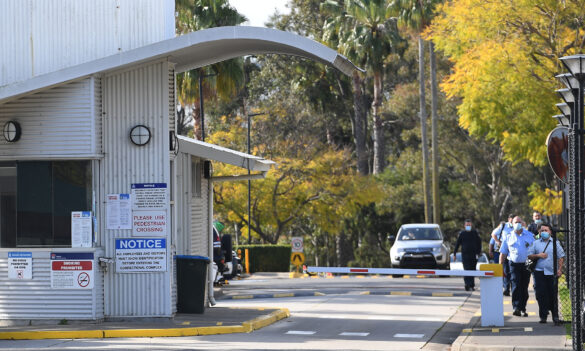
Following the PSA Broadcast dated 02 October 2025 HERE, we have received confirmation from the Government that they support the PSA’s request to amend legislation concerning the burden of proof in inmate discipline matters.
This development was discussed during an interview on 2GB between PSA General Secretary Stewart Little and Host Mark Levy.
As a result, the COVB State Executive directs all members to resume the inmate misconduct process as usual.
We are aware of the POVB State Executive’s current direction advising members not to undertake misconduct hearings while backfilling SAS roles on a daily basis. This issue is actively being negotiated with the POVB, particularly in relation to temporary assignments.
Further consultation with CSNSW is expected to take place next week
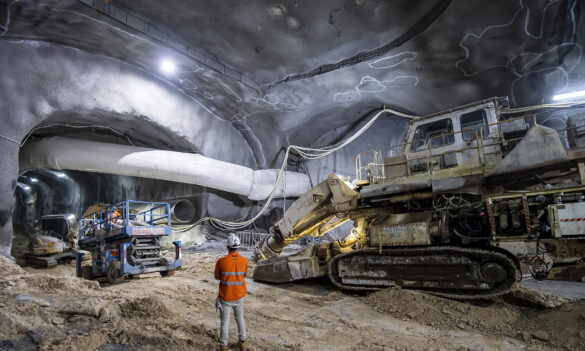
The PSA was back in the Industrial Relations Commission (IRC) on 2 October 2025 to continue conciliation around the TfNSW proposal to meet a “savings target” by cutting 950 Transport Senior Service Managers (TSSM) and Award positions.
Significant progress has been made in negotiations, with TfNSW agreeing to commit that there will be no external advertising or recruitment of any ongoing award role vacancies arising from the TFNSW Operating Model Restructure until 30 March 2026. While this does not include roles that are considered critical, even these critical roles will be required to go through internal recruitment, including those in mobility and considering promotional appointments before any external advertisement. Crucially, even after these controls have been explored and a vacancy has been advertised externally, the PSA will have the ability to put forward internal applicants for consideration before external applicants.
The above concession is important due to the staggered branch design consultations occurring, with some branches already commenced consultation, and other not due to start for months. It ensures that even if a branch is not due for consultation until the end of the process, they will have the ability to be considered for suitable roles from the branches that have already begun consultation.
In recognition of the progress being made, including the commitments previously made to cut hundreds of Labor Hire positions, the IRC has extended the conciliation process originally due to end next week, to a fifth week to allow further discussions to occur on other proposals the Unions have put forward, such as reducing the number of Transport Senior Service Executives (TSSE’s) that remain in TfNSW.
Attention turns to TSSE roles
The PSA has maintained that if “savings” need to be made, TfNSW should consider the huge number of TSSE’s that remain employed on extremely generous salaries rather than Award roles. Discussions will now turn to this significant issue, with the Unions providing examples of duplications and inefficiencies within TSSE structures. TfNSW have previously confirmed that their “savings target” is based on 300 TSSEs exiting the organisation – any TSSE removed above this number will therefore reduce the “savings” required from Award and TSSM roles. If you have examples of duplication and inefficiencies in the TSSE structures, please send them to the mailbox to assist in the dispute.
Consultation on branch design continuing
While the above issues are being explored in the IRC, consultation on branch designs continues. The PSA have been attending all consultation sessions with affected branches and submitting feedback in relation to the proposals. One common theme from a number of the branches out for consultation so far has been a lack of direct matching. The PSA believes that stronger consideration should be given to directly matching employees into positions that are graded the same, despite slight changes in functions of roles. The feedback we have provided is that in the main, affected employees have comparable capabilities that support direct matching.
Member meetings next week
The PSA will be holding member meetings to discuss the above, and other issues that have arisen throughout the restructure process. You can find the details below:
Wednesday 8 October 2025
Time 12:00pm – 1:00pm
Microsoft Teams
Meeting ID: 449 916 466 252 0
Passcode: Cg2nF9po
Thursday 9 October 2025
Time 12:00pm – 1:00pm
Microsoft Teams Need help?
Meeting ID: 489 785 343 826 4
Passcode: AZ6GK2iF
Contacts
TfNSW@PSA mailbox (for feedback on TSSE duplication, the operating model and branch design only) –
Member Support Centre (for specific individual industrial matters you need assistance with) –
PSA Organisers – Shane Jobberns () and Thomas Gao ()
Industrial Officer – Ben James ()
Your PSA Delegates
Safety, Policy, Environment and Regulation
Rachael Knight
Nathan Sweeney
Planning, Integration and Passenger
Angela Carroll
Hayley Dellaca
Leisa Sedger
Varada Shinde
Coordinator General
Michael Rohrlach
People, Communication and Workplaces
Joanne Kent
Arshdeep Kohli
Dane Richards
Gloria Nallas
Finance, Technology and Commercial
Gary Sladden
Point to Point (Combined Electorate)
Mick Lister
PSA Central Councilor
Lachlan Mercer

The consultation period for the proposed Fair Trading restructure closed on 17 September 2025 and we would like to thank members who participated in raising feedback by sending us your comments, questions and concerns so that these could be added into the Restructure Management Plan.
Fair Trading are currently reviewing the questions and comments as received within the consultation phase before finalising the Restructure Management Plan (RMP).
Attached for you is the document as provided by Fair Trading with the responses to your questions that were raised within this period.
Your PSA staff are:
PSA Industrial Officer, Xanthe Thomson
PSA Organiser, Mel Ciraolo
Please contact the PSA Member Support Centre on 1800 772 679 or email and quote Case ID C10009654
As a result of concerns arising out of the NSW Ombudsman’s Report, the Prison Officers Vocational Branch (POVB) issue this direction to its members.
In short:
“POVB State Executive directs that when performing higher duties, members are not to undertake the hearing of disciplinary charges.”
and
“The POVB State Executive direct that all inmate disciplinaries be initially referred to either the Visiting Justice or NSW Police.”
We will keep you updated on the progress of this matter

Life Without Barriers (LWB) are planning to close two of their corporate entities, LWB Disability Services Central (LDSC) and LWB Disability Services South (LDSS). These entities were set up by LWB in 2018 up to employ staff from the former NSW Department of Ageing, Disability and Home Care when the NSW Government privatised disabilities services.
This means there will be changes to how members will be paid for a limited time, as set out during consultation with LWB. The relevant documents can be found HERE for the Fact Sheet, and HERE for the Consultation document
Importantly, it does not appear that pay runs will be missed or delayed due to the proposed changes. However, members are welcome to seek assistance from the union if there are any questions.
Monika Wunderlin Industrial Officer

Your union is always there for you and your fellow members. PSA CPSU NSW partner Osara Health is hosting an exclusive webinar for members, Safety at Work: Cancer in the workplace.
As part of Safety at Work Month, Osara Health is hosting a special webinar that addresses this important but often overlooked topic.
Participants will learn strategies and best practices for fostering a supportive and inclusive workplace for employees impacted by cancer. They can get a better idea how they can support employees going through cancer treatment and learn how caregiving is crucial to building a compassionate and productive work environment.
All PSA CPSU NSW members are invited to log on and attend this free-of-charge event.
Date 8 October 2025
Time 12:00pm-1:00pm
You can find a link to the seminar HERE.
Available to PSA CPSU NSW members and their families, Osara Health is transforming the way we provide cancer care by empowering people and organisations affected by cancer to thrive using expertise, empathy and technology. Participants gain access to digital tools, dedicated health coaching and evidence-based educational resources, assisting them to feel supported, informed and in control of health outcomes and their wellbeing.
Cancer Coach by Osara Cancer Coach is an education, support and behavioural change program designed by oncologists to help people take back control of their cancer care and achieve better outcomes.
Cancer Caregivers by Osara Cancer Caregivers is designed to equip people with the support, information and skills to best look after their loved one living with cancer and improve their clinical outcomes.
Both programs are delivered flexibly and confidentially over 6 – 12 weeks through a mix of telephone calls with a Health Coach, via email and in-app. When you enrol, you will be contacted by a Health Coach who will walk you through everything.
Visit the Osara Health landing page for further information and access to the two enrolment methods for either program: www.osarahealth.com/en-AU/psacpsunsw or reach out to

The PSA was once again in the Industrial Relations Commission on Thursday 25 September to continue conciliation around the TfNSW proposal to meet a ‘savings target’ by cutting 950 Transport Senior Service Manager (TSSM) and Award positions. As previously reported to members, the current dispute is seeking to influence the decision making in how the stated $414 million in labour related savings (of which TfNSW declare $279 million will be saved through job cuts) is actually achieved.
Thursday’s conciliation was particularly focused on the planned consultation schedules for the branches going forward, time frames for mobility (both internal and external), and when TfNSW planned to potentially advertise externally for any roles affected by branch design. In general, the PSA wants members affected by branch design to be considered for all potential roles, regardless of what time their specific branch design is scheduled for.
Due to the number of matters still to be resolved, the IRC has scheduled a full day conciliation for next Thursday 2 October 2025. The PSA will be asking for recommendations to be given by the IRC in relation to the above.
So far there have been nine branches undergo their branch’s detailed design. While the specific effect for each branch will be different, the most common concerns in these consultations has been the lack of direct matching of staff for roles that might be slightly different, but still graded the same. The PSA believes that stronger attempts should be made to place staff affected by slight changes in role design, but no changes in grade, so that members aren’t forced to reapply for essentially the same role. The PSA has been compiling feedback throughout the consultation periods for these branches, so that changes to the proposed designs can be achieved.
Its not too late to contact your MP
The PSA has drafted a template letter that members may wish to send to their elected Member of Parliament. The letter asks whether they support the plan to cut 950 TfNSW workers, whilst continuing the protection racket for more than 1000 senior executives in Transport. You can visit the below link, which will allow you to view the template letter, amend as you see fit, and automatically send to your elected Member of Parliament.
TfNSW@PSA mailbox (for feedback on the operating model and branch design)
Member Support Centre (for specific individual industrial matters you need assistance with)
Rachael Knight
Nathan Sweeney
Angela Carroll
Hayley Dellaca
Leisa Sedger
Varada Shinde
Coordinator General
Michael Rohrlach
Joanne Kent
Arshdeep Kohli
Dane Richards
Gloria Nallas
Gary Sladden
Mick Lister
Lachlan Mercer
Following engagement with members, the CPSU NSW has developed a Log of Claims ahead of the next Enterprise Bargaining meeting with NSWALC set for Tuesday 30 September 2025.
The Log of Claims sets out key issues that CPSU NSW members have raised when it comes to their conditions of employment.
The Log of Claims does not intend to capture every issue, and as per Claim 20 the CPSU NSW reserves the right to raise, withdraw, modify, adjust, or amend existing or additional bargaining items as they may arise during bargaining negotiations and consultation with our Delegates and membership.
You can view the complete Log of Claims HERE.

The PSA invites all members to attend a meeting with your senior industrial officer and organiser to discuss the final restructure and its impact on staff.
This is a vital opportunity to receive updates, ask questions, and raise any concerns you may have regarding the changes.
If you know any non-members who would like to learn more about your union, please invite them to attend.
Members are encouraged to send any agenda items that they would like discussed to
If you are onsite, please join us in person, or use the link below to join on Teams.
Date 30 September 2025
Time 12:30pm-1:30pm
Location Meeting Room 4, Level 13, 231 Elizabeth Street
Meeting ID 444 183 938 170 3
Passcode 5pa9wc3X
Greg Shaw Senior Industrial Officer