Environment Protection Authority member update: Friday 27 March
Following on from our previous bulletin, the Public Service Association (PSA) is seeking feedback from members as a matter of urgency. The Environment Protection Authority (EPA) restructure and matching process matter was before the Industrial Relations Commission (IRC) on Wednesday 25 March.
The EPA confirmed there are 51 positions vacant and 26 staff from the 19 of January Workplace Mobility Placement process. That list is now available to view HERE.
If you believe you should have been matched to one of the 51 vacant roles, please contact Michael Sinclair at or Michael Parsons at
The matter is scheduled to return to the IRC Wednesday 1 April at 10:00am.
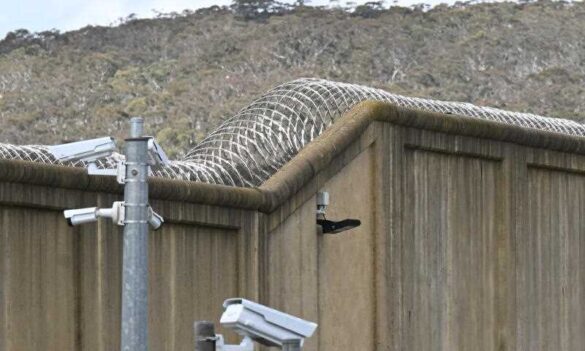
Correspondence was provided to the Corrective Services NSW on 10 March 2026 requesting the Operational management Plans, updated P28s and approved FTEs (funding) for locations that have had surge of beds implemented across the state.
Fourteen days’ notice was provided with no response provided, as such:
State Executive direction, motion and statements
1. Direction to all sub?branches
The POVB State Executive has issued the following directives:
Stop all negotiations regarding any further inmate surge bed increases.
Formally decline and deactivate all unfunded surge beds as soon as operationally possible.
Return to your approved and funded management plans immediately.
These actions follow sustained pressure to accept additional inmates without corresponding funded posts. This has directly contributed to:
increased lock?ins
rising tension across centres
record?high staff assault rates
staffing shortages and operational instability
Upcoming bed closures under the Prison Bed Effectiveness Program will only intensify these pressures. We will not continue absorbing unfunded workloads that compromise staff safety.
2. Motion: Demand for strategic plan
The POVB State Executive has formally demanded that the NSW Government and CSNSW provide the PSA/POVB with the CSNSW Strategic Plan covering:
1?year (short?term)
3?year (medium?term)
5?year (long?term) planning for the custodial system.
This information must be provided within 14 days and must include the commencement of meaningful consultation.
If this deadline is not met:
All sub?branches will be directed to implement an Overtime and Acting?Up Ban.
This will also support CSNSWs required $170 million budget correction, which cannot continue to be achieved through staff exhaustion.
The system is at breaking point
Members have been clear: the current operating environment is unsafe and unsustainable.
Across all centres we are seeing:
chronic understaffing
expectations to absorb increased inmate numbers without additional FTE
daily unfilled posts
reliance on excessive overtime
increased violence and operational risk
Staff goodwill is being eroded. Centres are struggling to function day?to?day.
The DCJ Strategic Plan 20262031 highlights four pillars: Visible Leadership, Doing Things Well, Building Capability, Workforce Wellbeing.
CSNSW is currently failing to meet all four.
Rising inmate numbers, falling resources
The POVB acknowledges the Governments commitment to community safety. However:
Inmate numbers are rising. Resources are not.
This mismatch has resulted in:
increased assaults
higher operational risk
more lock?ins
fewer programs, visits, and activities for inmates
worsening staff fatigue and burnout
AVL suites included in within CESU locations for Bails Court increasing workloads with no additional resources.
We are calling for an urgent statewide review of staffing levels (FTE).
Many centres are carrying significant unfunded workload, and more than 300 FTE are tied up in special projectsroles desperately needed back on the frontline. If those projects require staffing, the vacancies must be filled immediately.
The bottom line
The POVB will not allow centres to continue absorbing unfunded work that puts staff and inmates at risk.
We expect transparency, genuine consultation, and a strategic plan that addresses the realities on the ground.
Further updates will follow as this matter progresses.
In unity, Darren King
Chair POVB State Executive On behalf of the POVB State Executive
NSW Department of Climate Change, Energy, the Environment and Water, Water Group: members meeting: updated time
The Public Service Association was notified the planned members meeting time clashed with a drop-in session for Water Group staff. The PSA has moved the members meeting to ensure there is no scheduling conflict.
PSA Industrial Officer Michael Sinclair and PSA Organiser Michael Parsons attended the Thursday 26 March Town Hall briefing on the proposed changes as silent observers.
Members are encouraged to share this meeting notice with your colleagues and invite any non-members along if theyd like to find out more about being part of the PSA.
Meeting Details
The PSA is calling a hybrid members meeting to discuss the proposed changes. Michael Sinclair will be attending in person at Albury, and Michael Parsons will be in person at 4PSQ.
Date Tuesday 31 March 2026
Time 11:00am-12:00pm
Location Room 7, Level 13, 4PSQ;
Hume Conference Room, Macauley St office Albury, and online via teams
Management have given an undertaking to consult meaningfully on the proposed changes. The PSA will be collating member feedback to provide a comprehensive submission on the proposal on behalf of our members.
Consultation is scheduled to run for 4 weeks, closing 22 April.
Please send your feedback whether positive, constructive, or neutral to the PSA Member Support Centre at and PSA Organiser Michael Parsons at
Reconstruction Authority: responding to the fuel crisis
On Thursday 26 March 2026 the Public Service Association wrote to the Reconstruction Authority regarding the current fuel crisis.
Regional and remote NSW communities and farmers are disproportionately affected, with fewer fuel outlets decreasing competition and greater daily travel distances at higher speeds leading to higher fuel consumption. Scarcity of fuel is an increasing issue for country and farming communities, leading to higher prices. At the time of writing to the Department examples included $3.29L for Diesel fuel across New England Tablelands and $2.89L on the mid-north coast without taking into account other country regions.
The PSA has formally requested that the Reconstruction Authority allow the current flexible working arrangements to be relaxed for regional staff. This would take significant pressure off the regions fuel supplies also allowing farmers greater access to fuel in remote areas where there is a concern that fuel shortages may lead to food shortages.
SafeWork NSW: PSA members bulletin Stage 2 RMP proposal 26 March 2026
The PSA and SafeWork NSW members have now been formally advised of the proposed Stage 2 changes to the organisational structure.
The plan is for consultation to occur through to 14 April and final arrangements to be announced on 1 May, with a view to go live on 1 June.
Fifty-five staff members are affected by the change plan. The proposed arrangements would mean that 46 of these employees will experience one or more of the following changes:
Adjustments to reporting lines
Movements between organisational units
Updates to role descriptions
Renaming of functions
Nine existing roles are not included in the proposed structure.These staff will be given priority access to a closed Expression of Interest (EOI) process for any suitable at?grade positions aligned to their skills and experience, as well as suitable vacancies across SafeWork. If unsuccessful in the EOI process, or if they do not wish to partake in it, they would go into mobility from 1 June for eight weeks and then, if not matched, would be declared excess and can elect for a VR or redeployment. We are advised 1:1 meetings have occurred with all 9 impacted staff members.
HSRs have been briefed on the process for Stage 2 changes and the draft risk assessment has been shared with the PSA. SafeWork has committed to continue to work with the HSRs throughout the consultation period in case you wish to contact them.
PSA members are invited to forward their concerns or feedback to quoting CASE ID C10016790. You can also speak to a member support officer on 1800 772 679 with reference to that number.
The PSA will be in contact to arrange a meeting with members to discuss concerns.
Safework advise that EAP support has been made available and that a standby clinician is available from 8:00?AM to 4:00?PM weekdays up to and including 30 March. That service can be reached on 1300 307 912 using reference number #241121.
NSW Department of Climate Change, Energy, the Environment and Water: Water Group members meeting
The Public Service Association (PSA) has been invited to attend the in-person town hall briefing on the Phase 2 proposed changes in NSW Department of Climate Change, Energy, the Environment and Water: Water Group (DCCEEW) at 2:00pm, Thursday 26 March. PSA Industrial Officer Michael Sinclair and PSA Organiser Michael Parsons will be in attendance.
The PSA is aware meetings with directly impacted staff are being held this week prior to the town hall briefing, and has already been contacted by affected staff with concerns about the proposal.
The full details of the proposed changes are expected to be provided in the Town Hall.
The PSA is calling a hybrid members meeting to discuss the proposed changes. Michael Sinclair will be attending in person at Albury, and Michael Parsons will be in person at 4PSQ.
Management have given an undertaking to engage in meaningful consultation. The PSA will be collating member feedback to provide a comprehensive submission on the proposal on behalf of our members.
Please send your feedback whether positive, constructive, or neutral to the PSA Member Support Centre at and PSA Organiser Michael Parsons at
Faulconbridge Community Service Centre: come and meet the PSA!
Do you work from Faulconbridge Community Service Centre? The PSA is holding an in person and online members’ meeting. Whether youre in the office or working from home Organiser Andrea Cartwright will be available to discuss member issues.
Are you interested in becoming a Workplace Delegate?
Were looking for passionate representatives from your work site to join us at the Joint Consultative Committee (JCC) meeting for the Department of Community Services. This is your chance to have a voice, drive positive change, and represent your colleagues where it really counts!
If youre keen to get involved and help shape what happens in your workplace, we want to hear from you!
Come along to the lunch time meeting – this is a great opportunity for both members and non-members to:
· Meet your PSA Organiser.
· Learn the benefits of using the Workload Planner.
· Learn more about becoming a Delegate and the PSAs role in your workplace.
· Share ideas on how your union can best support you and your colleagues.
Whether youve got something specific to raise or just want to stay informed, wed love to see you there!
If you know any non-members that would like to learn more about your union, invite them to attend.
Meeting Details
Date:
Wednesday 1 April 2026
Time:
12:30pm 1:30pm
Location:
The Conference Room, or online via Microsoft Teams
Andrea Cartwright Organiser Graydon Welsh Industrial Officer
The PSA NSW has over 125 years of proud history, and you stand on the shoulders of more than 40,000 members who know we are stronger together.
Did you know your union also offers you:
Free emergency ambulance cover
Free Journey Insurance peace of mind if you have an accident travelling to and from work.
FREE Personal & Accident insurance lump sum claims for injuries and broken bones and for $11 extra get your whole immediate family covered (exclusive of broken bones)
Substantial shopping discounts with Union Shopper
Free will and Legal services and many other benefits
Department of Planning, Housing, and Infrastructure responding to the fuel crisis
Yesterday the Public Service Association (PSA) wrote to the Department of Planning, Housing and Infrastructure (DPHI ) regarding the current fuel crisis.
Regional and remote NSW communities and farmers are disproportionately affected, with fewer fuel outlets decreasing competition and greater daily travel distances at higher speeds leading to higher fuel consumption. Scarcity of fuel is an increasing issue for country and farming communities, leading to higher prices. At the time of writing to the Department examples included $3.29 per litre for diesel fuel across New England Tablelands and $2.89 per litre on the Mid-North Coast without taking into account other country regions.
The PSA has formally requested the Department allow the current flexible working arrangements to be relaxed for regional staff. This would take significant pressure off the regions fuel supplies also allowing farmers greater access to fuel in remote areas where there is a concern that fuel shortages may lead to food shortages.
We are waiting for a formal response from the Department.
Development Coordination Authority: Change Management Plan
The PSA is reaching out to members affected by the proposed Change Management Plan to establish the Development Coordination Authority (DCA), announced to DPHI staff at a Town Hall on 25 March 2026.
DPHI has proposed that from 1 July 2026, the DCA will commence operating under a new integrated organisational model that brings together functions currently performed across the Department and other agencies. While some employees transitioning into the DCA will continue performing work that is substantially the same as their current roles, others will undertake work that is similar in nature or experience changes to accountabilities and role requirements. These changes reflect the DCAs objective of operating as a single, coordinated point of contact for state input into the NSW planning system.
To support commencement of the DCA from 1 July 2026, a range of organisational, structural and operational changes are proposed to be implemented. This includes establishment of a proposed new organisational structure, workforce planning and internal role mapping, and development of business rules to support consistent and efficient operations. Collectively, these changes are proposed to align with existing and incoming functions with the DCAs mandate while ensuring continuity of services and a smooth transition for employees.
Advice to the PSA indicates Stage 1 impacts Transport for NSW, the Rural Fire Service and DCCEEW, with further information and drop?in sessions proposed. Other affected agencies may include EPA, DPIRD, Sydney Water, WaterNSW, Hunter Water, Subsidence Advisory, Fire and Rescue NSW and the SES.
The PSA is seeking from DPHI clear detail on consultation arrangements and will advocate for PSA members, to minimise impacts, and ensure consultation and industrial rights are upheld. The PSA will continue to engage with to members to provide feedback to DPHI on the CMP.
Meet your new PSA delegates
The DPHI Departmental Committee recently held its Annual General Meeting, where delegates elected a new Executive. Below is your chance to meet your delegates and learn who will be representing staff over the coming year.
Tom Chapman Chair
Having worked in the NSW Public Service for nearly four years, I became a PSA member and completed delegate training as soon as I secured a fixed?term contract in January 2023. At that time there were no delegates based in Orange, and I was more than happy to step up and help fill that gap.
Since then, I have actively participated in the Joint Consultative Committees for the past two years and have recently been elected Chair of the DPHI Departmental Committee, where I am committed to helping ensure the voices of PSA members are clearly represented within the Department.
Before joining the NSW Public Service, I worked on Sydney Harbour for Manly Fast Ferries and spent three years as a Delegate for the Maritime Union of Australia. During that time, I sat at the Enterprise Bargaining Agreement negotiation table, working to secure full-time employment for what had previously been a 100 per cent casualised workforce.
I strongly believe the union gives individuals a voice and enables constructive, well?managed change.
I look forward to representing PSA members across DPHI and advocating for what is best for workers and staff throughout the Department during these times of change.
Kristy Rizzo Vice-Chair
I became a union delegate to support fair treatment, clear communication, and staff wellbeing within our sector. I aim to ensure employees are informed, supported, and represented, and to contribute to a respectful, consultative workplace that enables strong public service delivery.
Donovan Harris Secretary
I have 25 years experience working in the NSW Public Sector across various departments and universities and have been a PSA member since 2001. I have taken on the role of union delegate because I am deeply committed to ensuring our workplace is one where every employee can thrive and because I believe collective action is essential to ensuring we all have access to a fair, transparent and employee-friendly workplace.
I am committed to ensuring our workplace is one where every employee can thrive. I hope that I can do this by ensuring our collective benefits and conditions are maintained and enhanced, based on conditions that reflect 21st-century ways of working, such as embracing technology in ways that enhance what we do rather than be seen as a way to reduce staffing. I want to see the organisation commit to upskilling staff to be able to take on new roles and projects rather than engaging consultants and contractors to do work than can and should be done by departmental staff.
Jack Turner Assistant Secretary
I am a delegate because I know what can be achieved with a strong an active membership in terms of workplace conditions and pay. An active PSA is particularly important during these tough economic conditions and housing crisis.
In my role I hope to provide support for members to resolve workplace issues and grow the membership.
Committee members
Alex Bannister Alex is a long-term member of the PSA working for Value NSW. She hopes to see the PSA grow and continue to have a voice, especially for rural members.
Arthur Simak I joined the PSA fairly recently but have always had a long standing respect for what the union does representing its workers. A colleague recommended me and I thought it would be an excellent opportunity to finally get involved and to act on behalf of our workforce.
I know that over the years there have been fewer people joining the union. Id like to make sure people are aware of their rights, that we are here to support them and that participating as a community and collective is the best way to make sure they are properly heard.
Daniel Keily Daniel works for the Office of Local Government and has been a PSA member and delegate for many years.
Louis Scipione I am a Senior Planning Officer with DPHI based on the far north coast. I became a PSA delegate because I value fair, transparent, and lawful workplace practices and believe better outcomes can be achieved through collective representation. My experience as a HSR has also highlighted the importance of advocacy, accountability, and clear communication when issues arise. As a delegate, I aim to support members by being an accessible and reliable point of contact, advocating for fair and transparent work practices, and ensuring employees voices are heard in decision making.
Yingyaun (Charles) Liu I am a software developer and work for Value NSW to support VALNET Property System.
I see many times the people get harassed, disadvantaged from managers or even dismissed. It is not fair for us, I think it is the time to fight back. That is the reason I joined the PSA member and became a delegate.
I commenced as a delegate in February 2026. I have always embraced the PSA community, taken part in union activities, listened to members’ voicesn worked closely with members, inviting more people to join the union and fought for PSA members’ fair rights.
General Assistants: time is ticking, survey closing soon!
We need your input! Survey will be closing Thursday, 26 March 2026 at 4pm. This is your last chance to have your say.
Earlier this year, over 750 schools were set to receive an increase in General Assistant (GA) staffing as part of a new allocation methodology aimed at addressing workload concerns and better aligning GA resources with school needs.
However, recent feedback has highlighted several issues:
Many GAs are unaware if their school received an increase, relying on leadership for updates.
Additional hours are not consistently offered to existing part-time GAs.
In some cases, funding is being used for purposes other than GA entitlements.
These concerns have been raised directly with the Department, the PSA is concerned that the implementation of the increases have undermined the intent of the changes.
We want to hear from you
Help us understand how these changes are being implemented in your school by taking five minutes to complete the survey: HERE
Your feedback is vital in ensuring GA workload and resources are properly addressed.
Members that work at the Service Centre within Shared Services at Transport for NSW (TfNSW) are invited to a meeting with your PSA Representatives.
On 3 March 2026, TfNSW presented staff their Workforce Planning Transition Update, advising of the change over from Alvaria to Genesys for members working within Shared Services.
Your union, the Public Service Association (PSA), has received the documentation and members have raised concerns about the proposed changes to standard working hours in the Service Centre, and the lack of consultation with affected staff and the PSA.
The PSA encourages members to join us and to share your feedback on these rostering changes within the Service Centre.
Know someone who isnt a member?
Invite them along so they can see the work their union is doing and get them to join HERE
PSA members are also invited to forward your concerns or feedback to and quote CASE ID C10016076
NSW Department of Climate Change, Energy, the Environment and Water: responding to the fuel crisis
On Thursday 19 March, the Public Service Association wrote to the Department of Climate Change, Energy, the Environment and Water regarding the current fuel crisis.
Regional and remote NSW communities and farmers are disproportionately affected, with fewer fuel outlets decreasing competition and greater daily travel distances at higher speeds leading to higher fuel consumption. Scarcity of fuel is an increasing issue for country and farming communities, leading to higher prices. At the time of writing to the Department examples included $3.29L for Diesel fuel across New England Tablelands and $2.89L on the mid-north coast without taking into account other country regions.
The PSA has formally requested the Department allow the current flexible working arrangements to be relaxed for regional staff. This would take significant pressure off the regions fuel supplies also allowing farmers greater access to fuel in remote areas where there is a concern that fuel shortages may lead to food shortages.
The PSA is waiting for a formal response from the Department.