PSA Members Meeting: Safework Improvement Notice for Lismore Court Hub
In May, Department of Communities and Justice (DCJ) Lismore Court Hub was subject to an Improvement Notice by SafeWork NSW, for contravening a provision in the Work Health and Safety Act for exposing workers to psychosocial hazard risks within the workplace. As a result of the notice, a Psychosocial Risk Assessment process is underway, consisting of a survey and focus groups.
The PSA would like to provide feedback to DCJ about this risk assessment including the process and invite PSA members working at the Lismore Hub to attend an online member meeting.
Update for PSA members: Communities and Justice Flexible Work Policy and Procedure
Following the release of the draft Department of Communities and Justice (DCJ) Flexible Work Policy and Procedure in December 2024, the PSA submitted feedback received following engagement from our members right across the Department. Feedback includes:
The policy is too open to individual interpretation, with decisions on “where work is to be done” left up to the discretion of an individual manager.
The need for the policy to include a definition of what “principally” in the office means as a benchmark for “where work is done”.
Without this benchmark for managers, the number of workplace grievances will skyrocket.
The discretionary component to flexibility disproportionately affects women. DCJ and Corrective Services NSW (CSNSW) need to explain how they will continue to support the workforce participation of women and gender equality if decisions around flexibility are left solely to individual managers.
There needs to be clearer guidance articulated in the policy on when additional arrangements may be approved, such as family responsibilities; significant commute times, regardless of whether employee is regional or metro; and illness or injury.
The need for recognition in the policy that people with family responsibilities, significant commute times, regardless of whether employee is regional or metro, and injury or illness can enter into an individual hybrid agreement which allows for more flexibility.
Recognition of the effect on regional communities and economies if flexibility is arbitrarily removed.
The need for an explicit section stating that things such as leave, including sick, recreational and flex, do not require any “making up” of office time. A sick day on an office day does not require a working from home day to be changed to an office day. Managers should simply manage sick leave and absences in line with policies and Award requirements.
Clearer support for more agile arrangements, in particular areas within the Department that should gain an automatic exemption, such as the Remote Service Delivery Team.
The need for a list of approved NSW Government offices, workplaces and related work sites and a DCJ- and CSNSW-wide booking system to make it easier for employees to work in the office.
The need for DCJ and CSNSW to conduct an audit and risk-assessment process around the current lack of IT infrastructure to support greater office presence, given majority of their meetings are on Teams.
The policy should have an effective date and should be future-focused. The policy should allow DCJ and CSNSW to honour arrangements that were approved in writing and are in place.
On Tuesday 24 March 2025, DCJ responded to the feedback received by releasing an updated policy and procedure for consultation. You can find the proposed updated policy HERE, and the proposed updated procedures HERE.
Some key amendments
The Department has made some amendments. However, a number of concerns raised with the policy remain unaddressed. The amendments made include:
An update to the definition of principally to state that “in DCJ, ‘Principally’ means that at least 50 per cent of your work time is spent at your approved office, workplace, or related work site/s, over a period of one month. At least some of that time is to be on a Monday or Friday.”
Only staff who do not meet this requirement are required to seek approval.
The following statement has been added to the Scope in both the policy and procedure:
“Remote working is not generally available to frontline staff. This Policy supports the implementation of NSW Premier’s Department Circular 2024-03 NSW Government Sector workplace presence in DCJ and CSNSW and it is not intended to introduce or expand remote working availability.”
The recognition of the need to define what “principally” in the office means to at least 50 per cent of your work time over a period of one month gives some guidance to what is acceptable under the policy.
The recognition that only employees not meeting the requirement of working “principally” from the office at least 50 per cent over a period of a month need to seek approval from their line manager is also, on the face of it, a welcome change.
The PSA believes it needs to be more explicitly stated within the policy that this arrangement is a standard one, which does not need a line manager’s explicit approval. The PSA has concerns that the procedures as stated, which involve a “team” discussion and plan, will be used by managers who may not support flexibility to deny arrangements which the policy states do not need their approval.
The addition of the statement that remote working is generally not available to frontline staff is an unnecessary addition. This may have the affect of removing flexibility for people who currently have it. The PSA strongly believes in an “if not, why not?” approach, which does not rely on whether someone’s roles is considered “frontline” or not by a particular manager.
Workplace adjustments
It is important to note DCJ has clarified there should be no changes for employees who have workplace adjustments in place, which include the need for working from home. Employees are eligible to ask for adjustments if they are a person with disability or a carer. You can view the DCJ Workplace adjustment Policy HERE. This policy is not changing. However, DCJ needs to ensure that workplace adjustments for things such as disability or caring responsibilities are managed under this policy, and not subject to the Flexible Work Policy and Procedures need for discretionary approval from a manager.
Where to from here?
The PSA has requested a further meeting with DCJ to discuss the Policy and Procedure and the changes that have been outlined above. We will also seek a clear communication plan from DCJ, and information on how they plan to consult with their staff on the above major change. We will keep members up to date with developments as they occur.
You can provide further feedback to the updated policy and procedures by contacting the PSA. The PSA has set up a dedicated mailbox at dcjflexiblework@psa.asn.au for providing feedback for anyone across DCJ.
As members would be aware, the Chief Magistrate’s Office has announced changes requiring Goulburn Court staff to attend Nowra Court periodically throughout the 2024 sitting year.
The PSA wrote to management in November last year highlighting the issues that we foresaw arising from this arrangement including Health and Safety risks, leave concerns, and reduced flexibility for those with caring responsibilities. You can view that correspondence here.
Management responded to the concerns raised by the PSA correspondence. You can view the full response here. The Department’s response includes the following:
That the change to the Goulburn Court Circuit was a decision made by the Chief Magistrate, who determines court circuits including when, where and how often the Local Court will sit at locations across the state.
Goulburn Court staff working at Nowra will be expected to leave the courtroom at 4:00pm (on the Tuesday) even if the court has not finished for the day. Both Magistrates will be advised that Goulburn Court staff will be leaving at this time for travel back to Goulburn.
As has always been the case for circuit travel, it will be a matter for local management to roster staff to cover operational requirements whilst ensuring reasonable and equitable access to incidental leave opportunities.
In relation to personal or carer responsibilities, as with the long-standing existing travel requirements for the circuit, there is an expectation that local management will take into account the personal commitments and responsibilities of staff when rostering to cover all commitments on the circuit.
The PSA expects that local management will indeed take into account personal commitments and caring responsibilities, as well as leave requests. The PSA encourages any members who have individual circumstances that may inhibit them from travelling to Nowra to reach out to us. We can advocate for individual members who encounter difficulties resulting from these changes.
The PSA has also gained a commitment from the Director, Illawarra South Region to meet mid-year to review how this change has been implemented.
Huge Win for Court Officers – Reclassification from January 2024
Earlier this morning, the PSA attended a consultation meeting with the Office of the Sheriff around the announcement that Court Officers working within the Sheriffs Office will transition from a Clerk General Scale to a Clerk 1/2 from January 2024.
What does this mean?
This will result in pay rises of approximately $3,688 from January 2024, with yearly increments every January to the top of the Clerk 1/2 rate. This will also mean that due to yearly PSA negotiated pay increases usually paid in July, Court Officers will receive 2 pay increases a year for the next 4 years.
The current Clerk 1/2 pay scales are reproduced below:
Classification
Common Salary Point
Salary as at 1.7.23
Grade 1
1st year of service
46
70,694
Thereafter
49
72,772
Grade 2
1st year of service
52
74,803
Thereafter
55
76,857
A fantastic outcome
Credit must be given to the Sheriff of NSW for this announcement and the progression of the Uplift program, as well as all involved from DCJ in approving this reclassification. Credit also must be given to your PSA delegates, who have been tirelessly pushing for the reclassification of Court Officers, as well as the progression of the Uplift for Sheriff Officers, recently raising this very issue with the Attorney General. The reclassification of Court Officers is a massive win for affecting real change via consent between all parties and shows the power of effective consultation and advocacy from your Union.
Consultation continues
The PSA understands that there will be no application process for the transition from Clerk General Scale to Clerk 1/2, and that staff will be automatically reclassified, or “appointed”. There is a commitment to no job losses through the process. We will have further updates as the Consultation around the announcement continues.
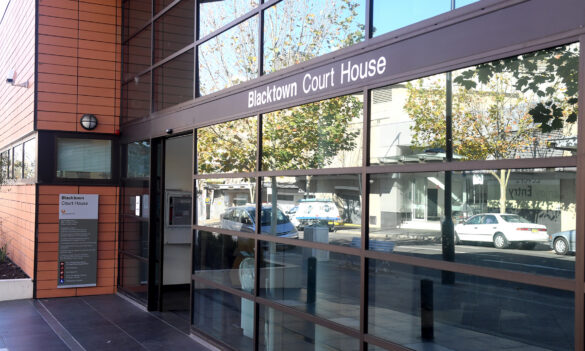
Members at Blacktown Court House recently raised concerns with the PSA regarding a leaking roof and mouldy smell that was impacting on their Work Health and Safety.
After raising these concerns with management approval was given to replace the entire roof at Blacktown Local Court, and these works will commence this financial year.
The Registrar has been advised to ensure Blacktown staff are aware the roof will be replaced. Following this, there will be solar panels installed, and interior ceiling/carpet tiles damaged by water replaced.
WHS training for PSA members
It is important that members are able to raise any WHS risks so that these risks can be mitigated.
Please look into PSA training sessions HERE that might interest you on this subject.
You are entitled to up to 12 days (over a two-year period) of Special Leave to attend union training, such as the ones detailed above.
Wage increase
The PSA has written to the Premier of NSW to lodge a claim for a wage increase of at least 3.6 per cent.
This claim is above the NSW Government’s Public Sector Wages Cap of 2.5 per cent. In light of current inflation, this restrictive wage cap means the NSW Government is once again expecting Public Servants to accept real wage cuts. The NSW Government currently remains wedded to this restrictive wage cap, even though experts such as the Reserve Bank governor Philip Lowe warning for several years that public sector pay caps are entrenching low wage growth. Mr Lowe has previously stated he wanted a “return to wage growth starting with a 3”. The PSA will be campaigning over the coming months for the Government to abandon this counterproductive, and unfair, wages cap.
Know a non-member?
Talk to your colleagues and ask them to join the PSA, and the campaign for higher wages, today at www.psa.asn.au.
Blacktown Court House: PSA raises the roof on safety
Thank you to all members who continue to call your union to make sure we advocate on your behalf to achieve better work conditions for yourselves!
Since we raised your concerns with management about the conditions at Blacktown Court House (leaking roofs, mould smell) there is approval to replace the building’s entire roof. These works will commence this financial year.
The Registrar has been advised to ensure Blacktown staff are aware the roof will be replaced. Following this, there will be solar panels installed, and interior ceiling/carpet tiles damaged by water replaced.
Members’ meeting
Your PSA Organiser, Alex Sala, be visiting the site for a meeting with members on Tuesday 29 March at 1:00pm. A reminder will be sent closer to this date. Membership forms will be available for any non-members interested in joining.
Thank you for supporting the union that works for you!
Wage increase
The PSA has written to the Premier of NSW to lodge a claim for a wage increase of at least 3.6 per cent.
This claim is above the NSW Government’s Public Sector Wages Cap of 2.5 per cent. In light of current inflation, this restrictive wage cap means the NSW Government is once again expecting Public Servants to accept real wage cuts. The NSW Government currently remains wedded to this restrictive wage cap, even though experts such as the Reserve Bank governor Philip Lowe warning for several years that public sector pay caps are entrenching low wage growth. Mr Lowe has previously stated he wanted a “return to wage growth starting with a 3”. The PSA will be campaigning over the coming months for the Government to abandon this counterproductive, and unfair, wages cap.
Know a non-member?
Talk to your colleagues and ask them to join the PSA, and the campaign for higher wages, today at www.psa.asn.au.
Are you aware of your union-negotiated Award conditions, and how they interact with your work daily?
Recently we have fielded enquiries from members surrounding meal breaks. Below are relevant extracts from the Crown Employees (Public Service Conditions of Employment) Reviewed Award regarding meal breaks.
Meal Breaks
15.1 Meal breaks must be given to and taken by employees. No employee shall be required to work continuously for more than 5 hours without a meal break, provided that: –
15.1.1 where the prescribed break is more than 30 minutes, the break may be reduced to not less than 30 minutes if the employee agrees. If the employee requests to reduce the break to not less than 30 minutes, the reduction must be operationally convenient; and
15.1.2 where the nature of the work of an employee or a group of employees is such that it is not possible for a meal break to be taken after not more than 5 hours, local arrangements may be negotiated between the Department Head and the Association to provide for payment of a penalty.
Standard Working Hours
20.1 Standard hours are set and regular with an hour for lunch and,
Flexible Working Hours
21.8 Lunch break – The standard lunch period shall be 1 hour. With the approval of the supervisor, the lunch period may be extended by the employee up to 2 and 1/2 hours or reduced to not less than 30 minutes within the span of hours determined by the Department Head.
Directions that reduce your entitlements
If you ever receive directions from your employer about changes to your conditions, without consultation, that may be incorrect information and your union can help you.
If your employer says things like:
You can eat your lunch in the car (while driving for work purposes)
Sometimes you can only take 15 minutes and it will even out because you are not always busy
they may be breaching your Award conditions. The PSA strongly advises you to take your prescribed breaks in full as they are your entitlement and are there for a reason, which has been negotiated and agreed upon by all parties involved.
The PSA has received concerns from members about the work health and safety of their colleagues and staff at Blacktown Courthouse. The PSA understands there have been issues with leaking roofs, unpleasant smells and mould, as well as exposed wires. This raises very serious concerns about the conditions which members are being made to work at this worksite.
Upon speaking with the Deputy Registrar at this court location, it was advised that this has been previously reported to the Department and that the issues are being looked at.
This is not good enough. When other arrangements can be made to look after the wellbeing, health, and safety of members such as working from home or alternate locations.
After this was raised by the PSA we were advised that Infrastructure and Assets staff were attending the Blacktown Courthouse on Tuesday 1 March, and that an electrician was called to this site and had advised the wires are not presenting a danger to members. The PSA was also advised that work in the roof of this court will commence within the next three or four months.
The request of the PSA is for the outcomes to be communicated to members and that all measures to ensure the work health and safety of members are treated as a matter of priority.
If you have any concerns around WHS issues, please call the PSA Member Support Centre on 1800 772 679, or contact your PSA Organiser Alex Sala on 0439 443 851. Additionally, please visit the PSA website HERE for training on work health and safety and other courses that may be of benefit.
Public Sector Wages Policy
In 2011, the NSW Coalition Government legislated to keep Public Sector wages down, deciding that 2.5 per cent would be the maximum annual pay rise the Public Sector could claim. The PSA lodges an annual pay claim on behalf of our members, but each year for the past decade, we have been limited, by law, to a maximum of 2.5 per cent. The effect of inflation and the NSW Government’s cap on wage increases means that the real wages of members have declined. This is compounded by members only receiving a 0.3 per cent salary increase in 2020 after the Government attempted to freeze Public Sector wages.
PSA Wages Claim 2022
A 2.5 per cent pay rise would mean a pay cut in real terms. With inflation running at 3.5 per cent, the PSA will be seeking a minimum increase of 3.6 per cent to members’ salaries. In addition, we will be seeking payment of superannuation on the unpaid portion of the first 12 months of parental leave for our members.
Members’ survey
We need to know how you feel about this. Please take a few minutes to complete our survey HERE. Completing it will take you less than two minutes. The survey will close on Friday 4 March.
Congratulations to our newest PSA Delegate – Liam O’Reilly
Congratulations to your newly elected Campbelltown Court House PSA Delegate – Liam O’Reilly.
Liam was nominated by PSA members to assist you at Campbelltown Court House and is looking forward to working alongside PSA Organiser Alex Sala in supporting and representing PSA Members in making a better place to work at.
Your PSA Delegate can be contacted at Your PSA Organiser can be contacted at
Additionally, matters can be raised by contacting the PSA Member Support Centre, on 1800 772 679.
Funeral details for Jeff Walters, Chair of the Petty Sessions Officers Association
It is with great sadness that the PSA advises members that Jeffrey Walters, Chair of the Petty Sessions Officers Association, passed away last week.
Jeff was a staunch unionist and a PSA member for over 30 years. He tirelessly advocated for workers’ rights. Jeff was highly respected for his selfless work on behalf of members. Jeff also contributed to all PSA members through his time on the PSA Central Council.
Jeff was also a currently elected councillor of our national union, the CPSU-State Public Sector Federation.
Due to the current COVID-19 restrictions, a private family funeral will be held.